From the President: Advocacy, Evidence, and Opening Doors for Primary Care
 español
By Prof. Viviana Martínez-Bianchi, MD
President, World Organization of Family Doctors (WONCA)
Advocacy is not an abstract concept for family doctors. It is embedded in our daily work, when we speak up for our patients, when we design care around people’s lives, and when we insist that health systems truly work for the communities they are meant to serve. At WONCA, advocacy is both a responsibility and a strategy, grounded in evidence, informed by practice, and carried forward on the global stage.
WONCA’s advocacy is multifaceted and intentional. We develop policy positions, engage global institutions, build research capacity, represent member organizations, and create tools that allow family doctors to make their work visible to decision-makers. Equity, access, and strong primary health care systems are at the center of this work. We know, clinically and empirically, that health systems anchored in comprehensive, continuous primary care achieve better outcomes, stronger financial protection, and lower inequities.
Our advocacy also takes place where global decisions are made. WONCA holds official relations with the World Health Organization, enabling us to bring the perspectives of family doctors directly into global health governance.
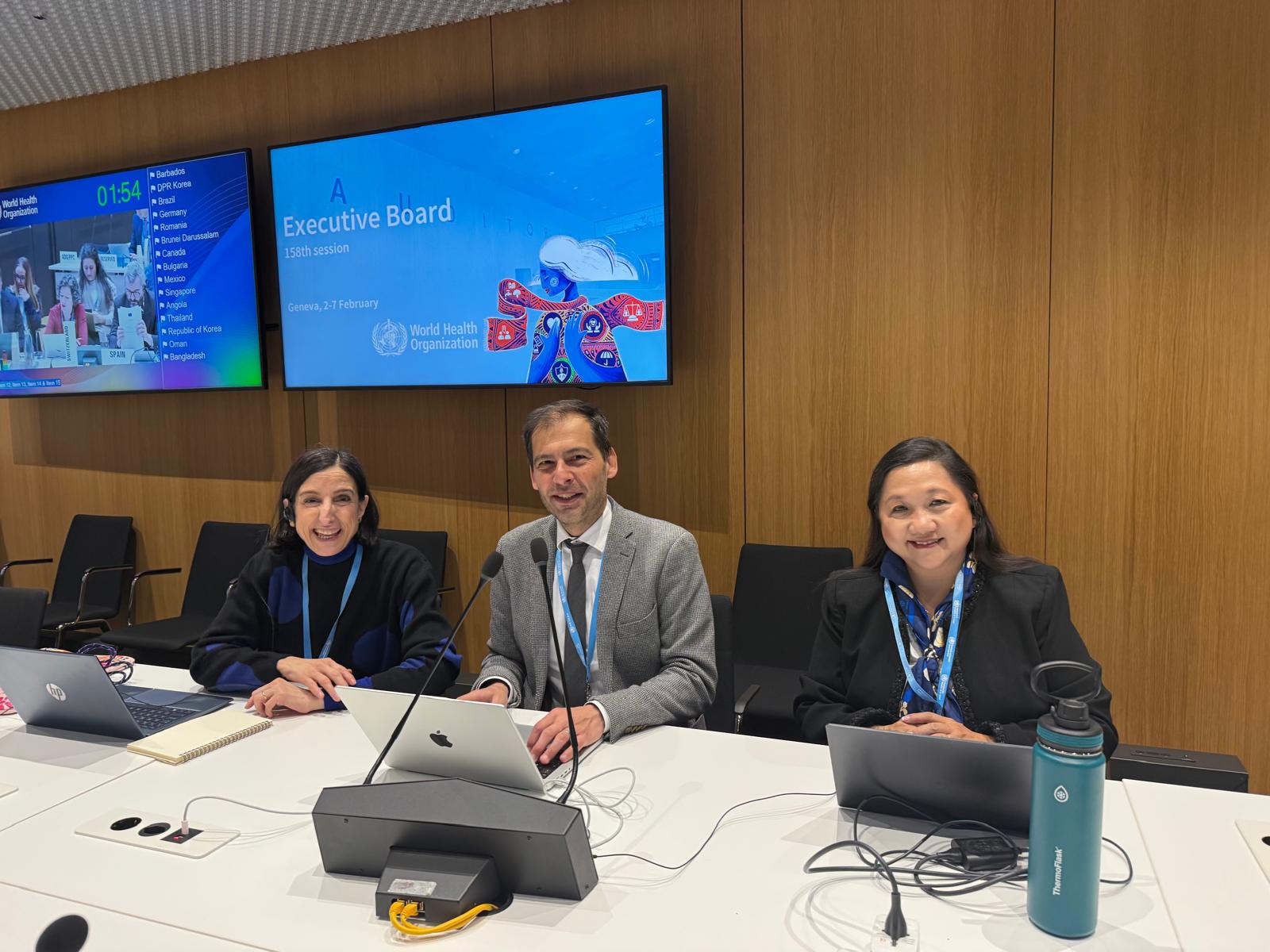
Photo: WONCA at the WHO Executive Board meeting in Geneva
This week, our WONCA–WHO Liaison Dr Kim Yu, President-Elect Prof. Pilar Astier, and Chief Executive Officer Dr. Harris Lygidakis are participating in the 158th session of the WHO Executive Board, ensuring that the voices of family doctors from around the world are heard. Through formal engagement, technical input, and sustained relationships, WONCA advocates for recognition of family medicine, investment in the primary care workforce, and health systems designed around people and communities.
Read more about WONCA at the WHO EB meeting.
Advocacy must be grounded in the realities of practice. A key pillar of my Presidency is strengthening WONCA’s ability to advocate—credibly, consistently, and effectively—for family medicine at local, national, regional, and global levels. Advocacy is strongest when it is grounded in real examples, practical tools, and the lived experience of family doctors across diverse contexts.
To support this, the WONCA Policy and Advocacy Special Interest Group is launching an important global survey. The aim is to gather existing advocacy, briefing, and policy documents that have been developed or used by our Members, Member Organizations, Special Interest Groups, and Working Parties to advance family medicine as a specialty. This survey is a critical step in strengthening our collective voice.
In additions, our colleagues from the University of Toronto, the largest academic Family Medicine department in the world, have develop a different survey, which aims to identify the learning needs for family physicians and primary care experts and practitioners who wish to more effectively engage in advocacy to shape policy in support of high-quality primary care and family medicine.
By grounding our advocacy tools in lived experience, we ensure that our messages to policymakers are credible, relevant, and actionable.
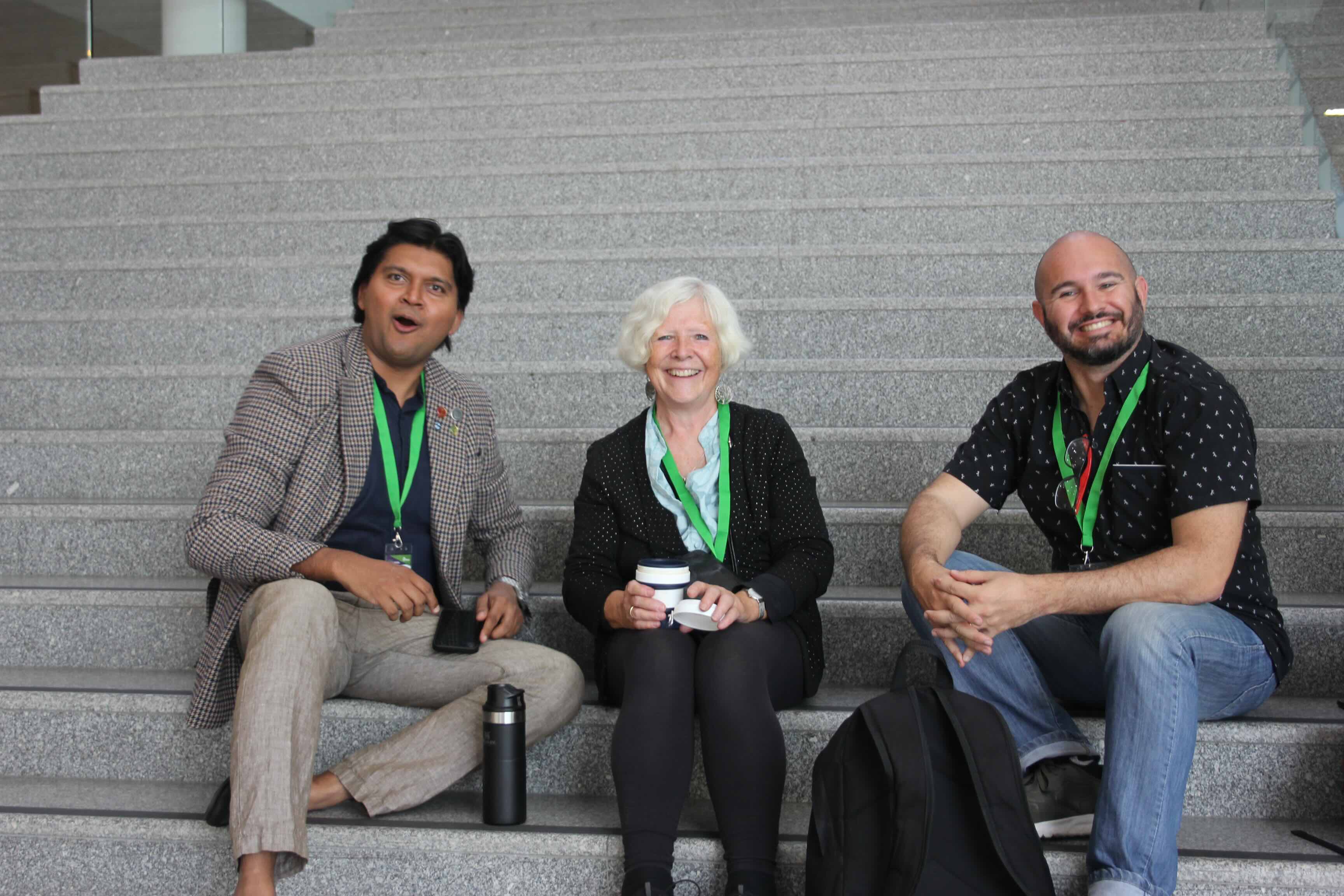
Photo: Leaders of the WONCA Special Interest Group on Policy Advocacy, Dr Sankha Randenikumara (Sri Lanka), Prof Amanda Howe (United Kingdom) and Dr Mariano Granero (Argentina) snapped by paparazzi at the WONCA World Conference in Lisbon, September 2025.
Advocacy also depends on evidence, and on the ability to generate, use, and share that evidence equitably. This is where one of WONCA’s most significant advocacy actions comes into focus: This month, WONCA is moving to make the International Classification of Primary Care, Third Revision (ICPC-3) openly licensed under a Creative Commons framework.
While classification systems are often viewed as technical tools, for family doctors, they illustrate how we listen to patients, how we document their stories, how we reason clinically, how we generate knowledge, and how our work becomes visible to health systems and policymakers. ICPC was created by family doctors, for family doctors, in response to growing concerns that international classifications were becoming increasingly shaped by super-specialization and reductionism. From its beginnings in the early 1970s -alongside the founding of WONCA itself- the work of the WONCA International Classification Committee (WICC) has been grounded in an eco-bio-psycho-social, person-centered understanding of health and illness, reflecting the holistic nature of family medicine
ICPC-3 is the most comprehensive classification designed specifically for primary care in a digital environment. It supports episode-of-care documentation, team-based practice, attention to functioning and social participation, and interoperability with major international systems such as ICD-11, ICF, and SNOMED CT. Its level of detail has been carefully calibrated to be clinically meaningful in primary care while supporting reliable data use and reducing the risk of over- or underdiagnosis. It reflects what family medicine truly is, relational, community-embedded, adaptable, and clinically rigorous.
Making ICPC-3 openly accessible is not simply a technical decision. It is an advocacy decision and an equity decision.
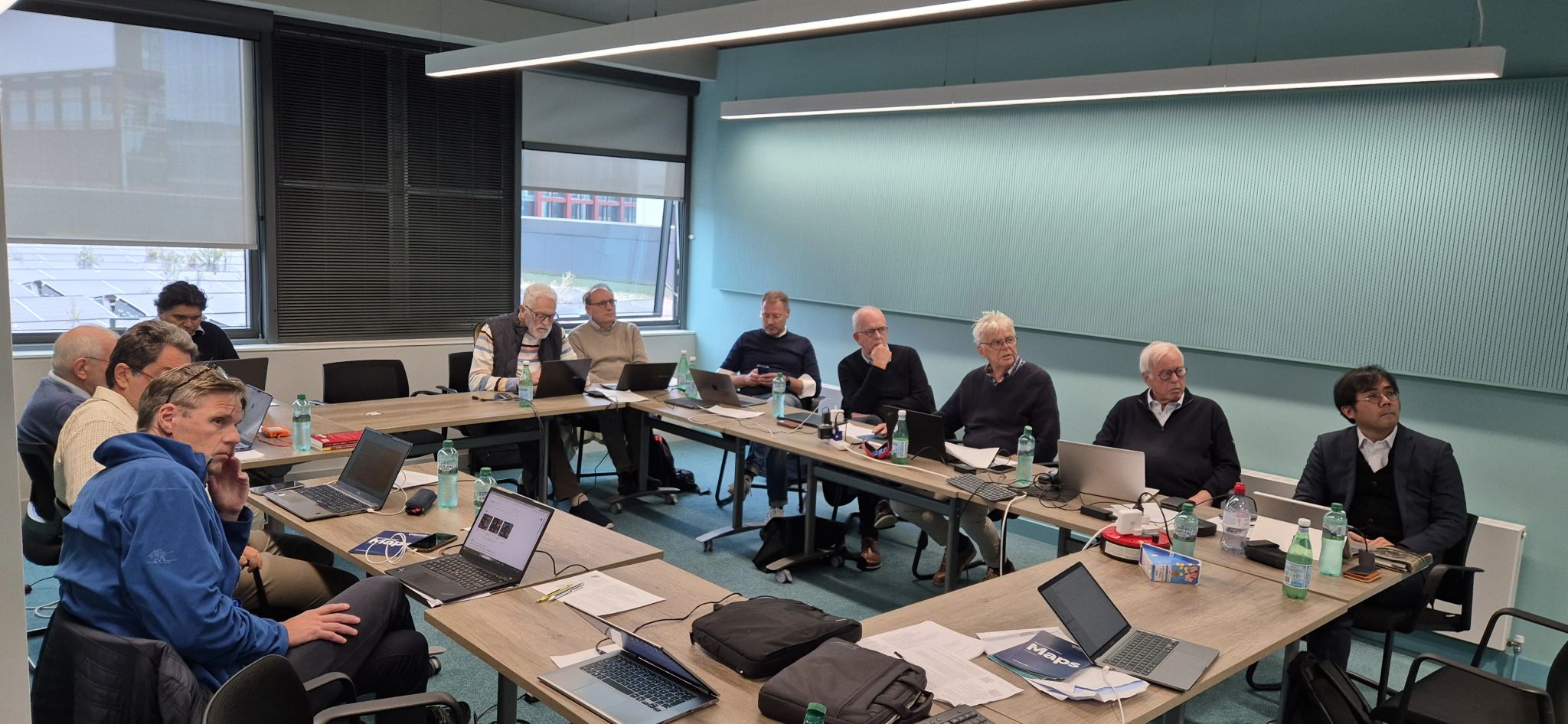
Photo: WONCA International Classifications Committee (WICC) Meeting in Newcastle, October 2024.
This decision also signals confidence in our discipline. By opening ICPC-3 to the world, WONCA is asserting that family medicine has the scientific maturity and leadership to define its own language within global health information systems. It places primary care firmly at the center of digital health, measurement, and system design.
Please read the communication by WONCA Working Party on International Classification (WICC) here.
Together, the global advocacy surveys and the move to open access ICPC-3 reflect a deliberate strategy to ensure that family doctors are not only heard, but equipped, not only represented, but empowered. Advocacy is strongest when it is informed by practice and supported by tools that make our work visible and valued.
A call to action
Advocacy is most powerful when it is collective. In this week’s newsletter, you will find a message from the WONCA Policy and Advocacy team with more details about this work. I warmly encourage you to read it and to take part in the surveys currently underway, both the global advocacy survey led by the WONCA Policy Advocacy Special Interest Group and the complementary survey from the Department of Family and Community Medicine at the University of Toronto. Your experiences, priorities, and insights matter. By responding, you help shape the advocacy tools, policy positions, and evidence base that WONCA and partners will carry forward on behalf of family doctors worldwide.
Advocacy is part of our professional duty as family doctors. Whether at the bedside, in our communities, or in global policy forums, our responsibility is the same, to insist on health systems that are strong, equitable, and centered on people. By strengthening advocacy and opening ICPC-3 to the world, WONCA is doing exactly that.