Author Interview: The Future of Primary Care Research
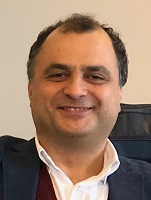
Future Perspectives in Primary Care Research is the newest title in the WONCA Family Medicine book series. In this interview, co-editor Professor Mehmet Akman (Türkiye), past Chair of the WONCA Working Party on Research, reflects on why primary care research matters now, what excites him about the years ahead, and what he would say to young doctors trying to find time for research.
Why is primary care research so important now, more than ever?
Primary care is facing a level of complexity that we have never seen before. Populations are ageing, and multimorbidity is becoming the norm. Health inequities remain persistent, and health systems are under increasing financial and workforce pressure. At the same time, digitalisation, artificial intelligence and new forms of data are changing how care is delivered and how research can be conducted.
Primary care is where most people first meet the health system, and where much of long-term care takes place. Yet many of the questions that matter most in everyday practice cannot be answered simply by transferring evidence from highly controlled or specialist settings. We need research that reflects real patients, real life, real communities and real health systems, where people are actually living.
For me, this is why strong primary care research is not just an academic interest. It is essential for developing more effective, equitable and sustainable health systems.
The title of this book looks to the future. What developments in primary care research are you most excited about over the next decade?
What excites me most is not one particular technology or methodology, but the widening of what we consider legitimate and useful primary care research. We are becoming better able to understand complexity and to study it, rather than trying to remove it from our research designs. That is a real gain.
Artificial intelligence, big data and digital tools will clearly create new opportunities, but developments in implementation research, patient and community co-design, mixed methods and new approaches to clinical trials are just as important. We are also seeing primary care research extend into areas such as personalised care, genomics, planetary health and the resilience of health services. The real opportunity is bringing all of these together.
The future should not be technology-driven. It should be question-driven. We should use new methods and technologies where they help us answer important primary care questions more rigorously, more efficiently and with greater relevance to patients and to our communities.
One of the strengths of this book is its international authorship. Why is a global perspective so important in primary care research?
Primary care is highly dependent on context. The organisation of services, the available workforce, how a system is financed, disease patterns, culture and community expectations all differ enormously between countries. A solution that works well in one health system may not transfer directly to another. So primary care research needs both local relevance and international exchange.
If we carry out research in different countries and different settings, we can exchange the evidence and understand what works better in which context. A global perspective allows us to learn from different models, rather than assuming that innovation always moves from high-income to lower-income settings. There is a great deal of experience and innovation emerging from resource-constrained environments, community-based systems and countries undergoing health system transformation.
Bringing together contributors from all these different regions and settings matters for a book like this, and it reflects the character of WONCA itself. Primary care is a global discipline, but it is practised locally. Good research has to respect both realities.
If readers take away just one message from Future Perspectives in Primary Care Research, what would you like it to be?
I would like readers to remember that the future of primary care research is not simply about adopting new methods or new technologies. It is about asking better questions about the problems that matter to patients, communities and health systems, and then choosing the most appropriate ways to answer them.
Research must remain scientifically rigorous, but it must also be relevant, ethical, inclusive and capable of improving care. That means connecting evidence generation with implementation, strengthening research capacity, involving patients and communities, and ensuring that innovation does not widen existing inequalities.
If I had to put it in one sentence, I would say that the future of primary care research depends on our ability to combine scientific rigour with real-world relevance and a clear commitment to improving the health of the people and communities we serve.
Many young GPs starting out have a lot of competing priorities: increasing workloads, family life and more. What advice would you give to young doctors who struggle to find the time to do research in primary care?
It is completely understandable. Primary care is demanding and it is person-centred, so you are inside the community, in real life, with many demands on your time. But at the same time, you are creating the data of that community.
One way to tackle the problem of time is through research networks. This began with practice-based networks, where you can share your data and analyse it for quality improvement. Later, you can start to ask questions of that data, or new questions emerge from what you have summarised, and you can build a research question around them.
So if you are a young GP working in a primary care centre, the best place to start is to understand the community you are living in and to look at your own data. Then combine that data with your neighbouring GPs, build a shared picture of the community and let a research question come from real life itself. That is what produces relevant outcomes, and relevant evidence for the future practice of primary care.
About the author
Mehmet Akman, MD, MPH, is a general practitioner and professor of family medicine at Marmara University School of Medicine in Istanbul, and a visiting professor at Karabakh University in Azerbaijan. He is a long-standing figure in international primary care research, a past Chair of the WONCA Working Party on Research and Editor-in-Chief of the journal Primary Health Care Research & Development. He also serves on the executive board of the European Forum for Primary Care (EFPC). His research interests include primary care systems, quality of care, chronic disease management and medical education, with a particular interest in the medical humanities.
About the book
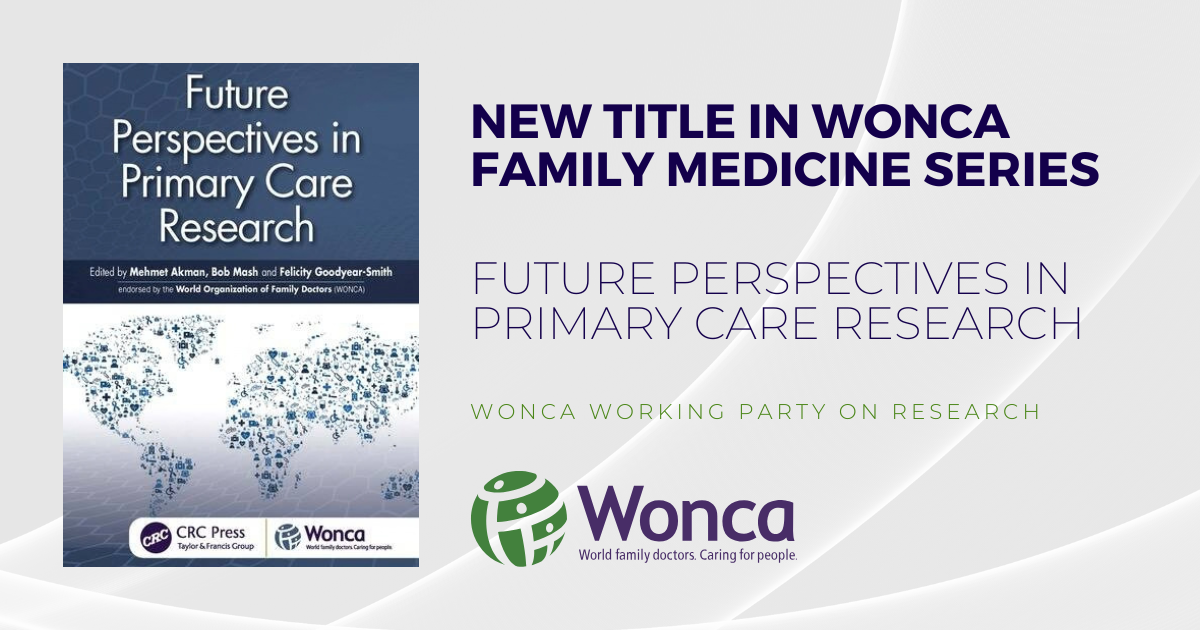
Future Perspectives in Primary Care Research
Edited by Mehmet Akman, Bob Mash and Felicity Goodyear-Smith
WONCA Family Medicine book series, CRC Press, 2026
The book was launched at the 9th WONCA Africa Region Conference in Gaborone, Botswana, where co-editor Professor Bob Mash was in attendance.
You can find the book here: Future Perspectives in Primary Care Research (CRC Press).
Explore other titles in the series: WONCA Family Medicine Book Series.
Video interview