World Patient Safety Day 2026
Safe Care for Life Through Strong Primary Health Care: Family Doctors, Primary Care Teams and Patients and Caregivers
On 17 September 2026, WONCA joins the World Health Organization (WHO), patients, health professionals, policymakers and partners around the world in marking World Patient Safety Day 2026.
WONCA, the World Organization of Family Doctors, represents approximately 500,000 family doctors through 133 Member Organisations in 140 countries and territories, covering more than 90% of the world's population. As a non-state actor in official relations with WHO, WONCA works closely with WHO, governments, professional organisations, academic institutions and patient groups to strengthen primary health care (PHC) and improve health outcomes globally.
This year's WHO World Patient Safety Day focuses on "Safe Care for People with Noncommunicable Diseases (NCDs)" under the campaign slogan "Safe Care for Life!" The campaign highlights one of the most pressing health challenges of our time. NCDs, including cardiovascular diseases, cancers, chronic respiratory diseases, diabetes and mental health conditions, account for the majority of deaths worldwide and require ongoing care throughout life.
WHO has highlighted that people living with NCDs are particularly vulnerable to harm due to the long-term nature of their conditions, ongoing treatment needs and frequent interactions with health systems. Delivering safe, high-quality care for people living with NCDs is therefore essential to achieving global commitments to NCD prevention, treatment and long-term management.
WONCA strongly supports the WHO call for multisectoral and multi-stakeholder action to ensure that no one is harmed while receiving care for NCDs. WONCA particularly welcomes WHO's emphasis on three interconnected priorities in this year's campaign: strengthening primary health care, supporting the health workforce, and ensuring that people living with NCDs are partners in safer care. These priorities resonate strongly with the principles of family medicine and the contribution of family doctors and primary care teams worldwide.
Safety across the continuum of care and daily life
A central message of the WHO campaign is that safety risks can occur throughout the continuum of care and in daily life.
For people living with NCDs, risks may arise during prevention and screening, diagnosis, treatment, medication management, long-term follow-up, rehabilitation, self-management, and transitions between different parts of the health system. Harm may result from delayed diagnosis, medication-related adverse events, polypharmacy, overprescribing, communication failures, fragmented care, inadequate follow-up, transitions of care, or barriers that limit access to safe and effective services.
Many people live with multiple chronic conditions, increasing the complexity of care and the risk of preventable harm. Social and commercial determinants of health, poverty, discrimination and inequitable access to services can further compound these risks.
From a family medicine perspective, patient safety is not a single event or intervention. It is a continuous commitment to providing safe, coordinated, high-quality and person-centred care throughout the NCD journey and across the life course.
People living with NCDs must be partners in safe care
Another central message of World Patient Safety Day 2026 is that people living with NCDs must be active partners in their care.
This principle aligns strongly with family medicine's commitment to person-centred care and shared decision-making.
People living with NCDs spend most of their lives in their homes and communities rather than in healthcare facilities. Their lived experiences, preferences, goals and values are therefore essential to improving safety and quality of care. Strengthening health literacy, supporting self-management and learning from people with lived experience help identify risks and co-design better solutions.
WONCA welcomes collaboration with patient organisations and global partners, including the International Alliance of Patients' Organizations (IAPO), WHO and many others working to advance safer care for people living with NCDs.
Strong primary health care and primary care services are the foundations for patient safety
WHO emphasises that strong, integrated health systems and a supported health workforce are essential for safe care.
For WONCA, this message reinforces the importance of strong primary health care-oriented health systems that support high-quality primary care services and multidisciplinary primary care teams.
WHO defines primary health care (PHC) as a whole-of-society approach that combines integrated health services, multisectoral action on the determinants of health, and empowered people and communities. Within this broader framework, family doctors and primary care teams contribute by delivering accessible, comprehensive, continuous, coordinated and person-centred primary care services along people's life course.
Evidence from across countries consistently demonstrates that strong PHC-oriented health systems improve health outcomes, promote equity, strengthen health system resilience and contribute to universal health coverage. For people living with NCDs, safe care depends not only on individual clinical decisions but also on health systems that support continuity of care, workforce development, community engagement, intersectoral collaboration and equitable access to services. Safe care also requires reliable access to essential medicines, diagnostics, monitoring and referral pathways. In many settings, especially in low socioeconomic areas, humanitarian settings and conflict zones, interruptions in these basic components of NCD care may represent an important and preventable source of patient harm.
Strengthening PHC-oriented systems, including strong primary care services led by family doctors and multidisciplinary primary care teams, is therefore a key strategy for reducing preventable harm and improving outcomes across the continuum of NCD care.
The unique contribution of family doctors and primary care teams
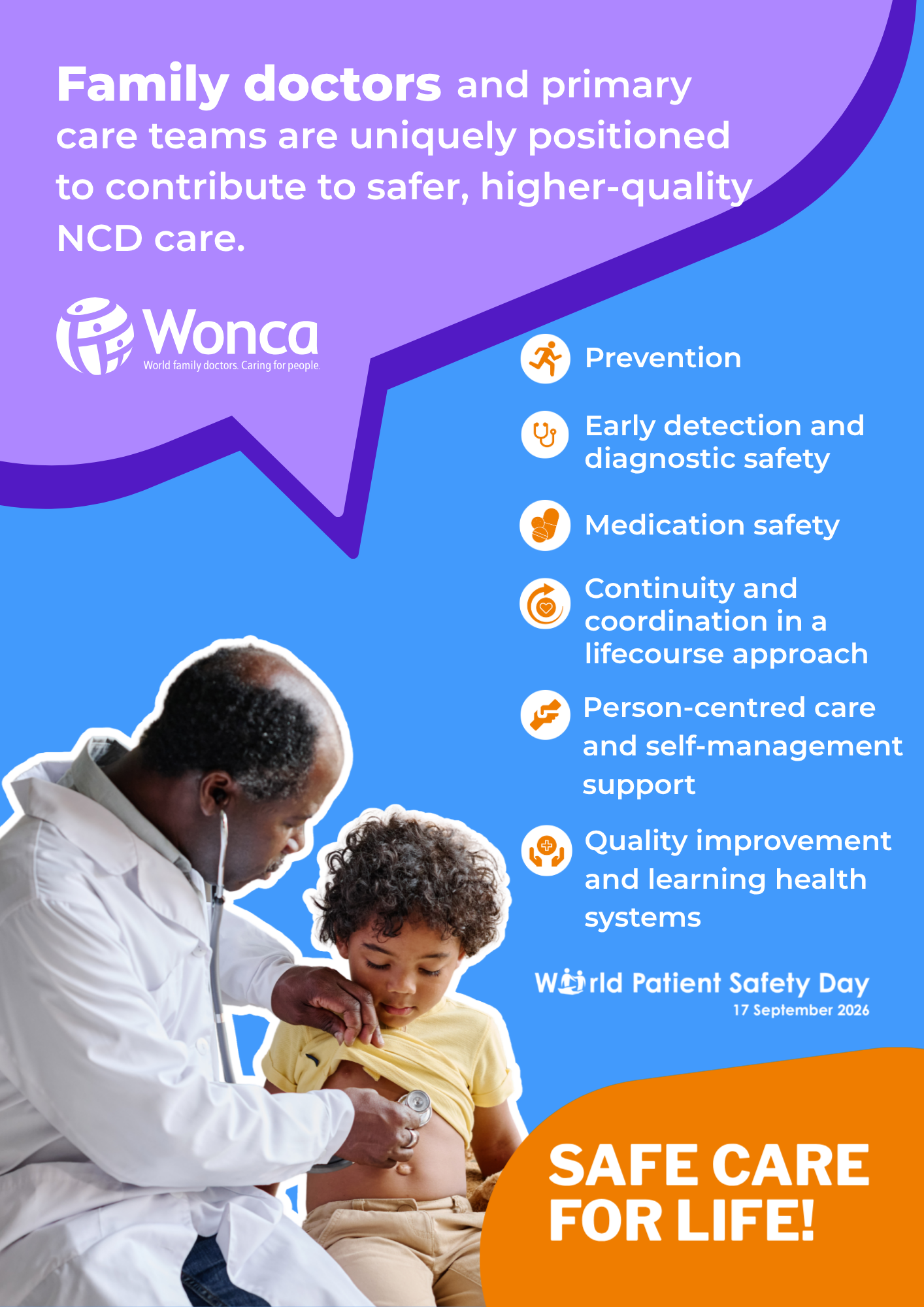
Family doctors and primary care teams are uniquely positioned to contribute to safer, higher-quality NCD care.
As the first point of contact for most health concerns and the health professionals most likely to accompany individuals across the life course, family doctors provide comprehensive, continuous, coordinated and person-centred care. Their long-term relationships with patients, families and communities create the trust and continuity that underpin safe and effective primary care.
The contribution of family and primary care teams to safer NCD care can be understood through:
Prevention activities
Safer NCD care begins with prevention in primary care. Primary, secondary, tertiary, quaternary and quinary prevention are all methods by which we can help patients to stay safe, exploring and encouraging lifestyle behaviour modifications as an addition or a safer alternative to other interventions, and helping people reduce their risks from inappropriate health information.
Prevention, earlier detection and diagnostic safety
Family doctors support timely diagnosis through prevention, risk assessment, screening, clinical vigilance and longitudinal knowledge of their patients and communities. Some NCDs are invisible to the affected person, who does not feel sick if they have raised blood pressure, lipids or end-organ damage. Early detection creates opportunities to prevent complications and improve outcomes. Safe diagnosis involves avoiding both missed or delayed diagnoses and unnecessary investigation, overdiagnosis, and overtreatment.
Medication safety
People living with NCDs frequently require multiple medications over many years. Primary care teams play a crucial role in medication review, reconciliation, monitoring for adverse effects, supporting adherence and deprescribing when appropriate. Medication safety also depends on affordability, availability and continuity of access to essential medicines. Primary care teams can help identify barriers to access, simplify medication regimens where appropriate and reduce duplication or conflicting prescriptions across different parts of the health system.
Continuity and coordination in a life course approach
Patients often move between primary care, specialist services, hospitals, rehabilitation programmes and community-based services. Family doctors help coordinate these transitions, reducing fragmentation and promoting safer care across settings and providing seamless, connected support through every stage of life. Transitions of care are particularly vulnerable moments.
Person-centred care and self-management support
Most NCD care takes place outside healthcare facilities. Family doctors and primary care teams support patients and families in understanding their conditions, participating in shared decision-making, strengthening self-management skills, and navigating health systems effectively.
For people living with multiple NCDs, the cumulative demands of medicines, monitoring, appointments, investigations and lifestyle recommendations can become difficult to manage. Family doctors can help patients prioritise care, simplify treatment where appropriate and develop plans that are clinically sound, feasible and aligned with what matters most to the patient.
Quality improvement and learning health systems
Primary care teams continuously identify opportunities to improve care processes, patient experiences and health outcomes. Through quality improvement, audit and feedback, teamwork, reflective practice, learning systems and the thoughtful use of data, family doctors contribute to safer, more effective, more equitable and more person-centred care for people living with NCDs.
From commitment to action
Around the world, family doctors and primary care teams are leading innovations that strengthen quality and safety in NCD care. These efforts range from improving prevention and screening programmes to strengthening continuity of care, supporting self-management, reducing medication-related harm and improving access for underserved populations.
WONCA remains committed to supporting these efforts through its Working Party on Quality and Safety, the Special Interest Group on Noncommunicable Diseases, regional WONCA networks, and strategic partnerships with the WHO.
One example is the inaugural WONCA Young Family Doctors NCD Fellowship, which supports emerging leaders from multiple regions to undertake quality improvement projects focused on NCD prevention and care. While only one of many initiatives contributing to stronger NCD care globally, the fellowship reflects WONCA's commitment to developing future leaders who can strengthen the quality, safety and effectiveness of primary care services within their local contexts and health systems.
Join the global movement for safer NCD care
WONCA encourages its Member Organisations, global and regional Working Parties, Special Interest Groups, Academic Members and partners to join the global World Patient Safety Day campaign on 17 September 2026. WHO is encouraging countries, health organisations, professional bodies and communities to organise awareness-raising activities and illuminate iconic buildings and landmarks in orange to highlight the importance of Safe Care for Life. We encourage family doctors and primary care teams worldwide to share their initiatives and contribute to the global movement for safer NCD care. Further information, campaign materials and opportunities to participate are available on the WHO World Patient Safety Day 2026 campaign website.
A call to action
World Patient Safety Day 2026 reminds us that achieving global commitments to NCD prevention and management requires safe, high-quality care for all.
WONCA therefore joins WHO and calls on governments, health system leaders, healthcare organisations, educators, researchers, professional bodies and clinicians to:
- Strengthen primary health care as the foundation for safe, high-quality NCD care.
- Support integrated, people-centred services across the continuum of care.
- Promote safer diagnosis, medication safety and continuity of care.
- Address multimorbidity and treatment burden through whole-person rather than solely disease-specific approaches.
- Invest in a well-supported and adequately trained health workforce.
- Support family doctors and multidisciplinary primary care teams as key contributors to safe NCD care.
- Engage patients, families and communities as partners in improving safety.
- Reduce inequities and barriers that increase the risk of preventable harm, including barriers to essential medicines, diagnostics, monitoring and referral.
- Foster leadership, learning and quality improvement throughout health systems.
As family doctors, we witness every day how safety is built through relationships, continuity, teamwork, coordination and trust.
As a global organisation representing family doctors and primary care teams worldwide, WONCA reaffirms its commitment to supporting WHO's vision of safe, people-centred and integrated care for all. Through advocacy, education, research, leadership development, quality improvement and partnerships across regions and health systems, WONCA seeks to strengthen the contribution of family medicine and primary care teams to safer NCD care.
By strengthening primary health care and working in partnership with patients, communities, policymakers and global partners, we can help ensure Safe Care for Life for all people living with noncommunicable diseases.
Practical actions for safer NCD care
Practical actions for family doctors and primary health care teams to provide safe care to patients living with NCDs for life include:
- Review medication lists regularly, particularly for people living with multimorbidity and polypharmacy.
- Reconcile medicines following hospitalisation and other transitions of care.
- Strengthen diagnostic safety by ensuring abnormal results are followed up.
- Ask patients about adverse effects, treatment burden and barriers to accessing medicines, investigations and follow-up.
- Use shared decision-making to align treatment with patients' priorities, circumstances and goals.
- Strengthen continuity through clear follow-up plans and effective communication across services.
- Learn from safety incidents and near misses through team-based quality improvement.
- Partner with patients, families and communities to identify risks and develop safer solutions.
Safe Care for Life requires strong primary health care-oriented health systems, empowered patients and communities, and high-quality, person-centred primary care delivered by family doctors and primary care teams across the continuum of care.
Authors
 Klaus B. von Pressentin
Associate Professor and Head, Division of Family Medicine, University of Cape Town.
Chair, WONCA Working Party on Quality and Safety.
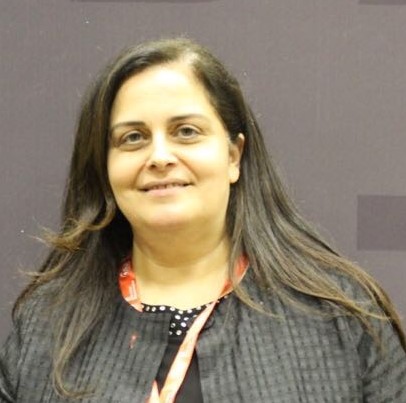 Mona Osman, MD, MPH, MBA, MHPE, DipIBLM
Associate Professor of Family Medicine, American University of Beirut.
Chair, WONCA Special Interest Group on NCDs.
with contribution from:
Viviana Martínez-Bianchi, MD, FAAFP
Professor and Director of Community Engagement, Duke University Department of Family Medicine and Community Health.
President, World Organization of Family Doctors (WONCA).
Maria Pilar Astier-Peña
Family Physician, Universitas Health Centre, Health Service of Aragon, Spain.
Permanent Professor, Medical School, University of Zaragoza, Spain.
President-elect, World Organization of Family Doctors (WONCA).
Andrée Rochfort
Assistant Clinical Professor.
Director, Irish College of General Practitioners Quality Improvement and Doctors' Health Programme.
José M. Valderas
Head, Department of Family Medicine, National University Health System, Singapore.
Chair, WONCA Working Party on Research.
Kim Yu
Family Physician, Kaiser Permanente, Orange County, California, and PRIME National Strategy Consultant, American Board of Family Medicine.
WONCA Liaison to the World Health Organization.
Mercy Wanjala
Family Physician and Primary Healthcare Coordinator, County Government of Embu Health Department, Kenya.
National Secretary, Kenya Association of Family Physicians.
Join our World Patient Safety Day webinar
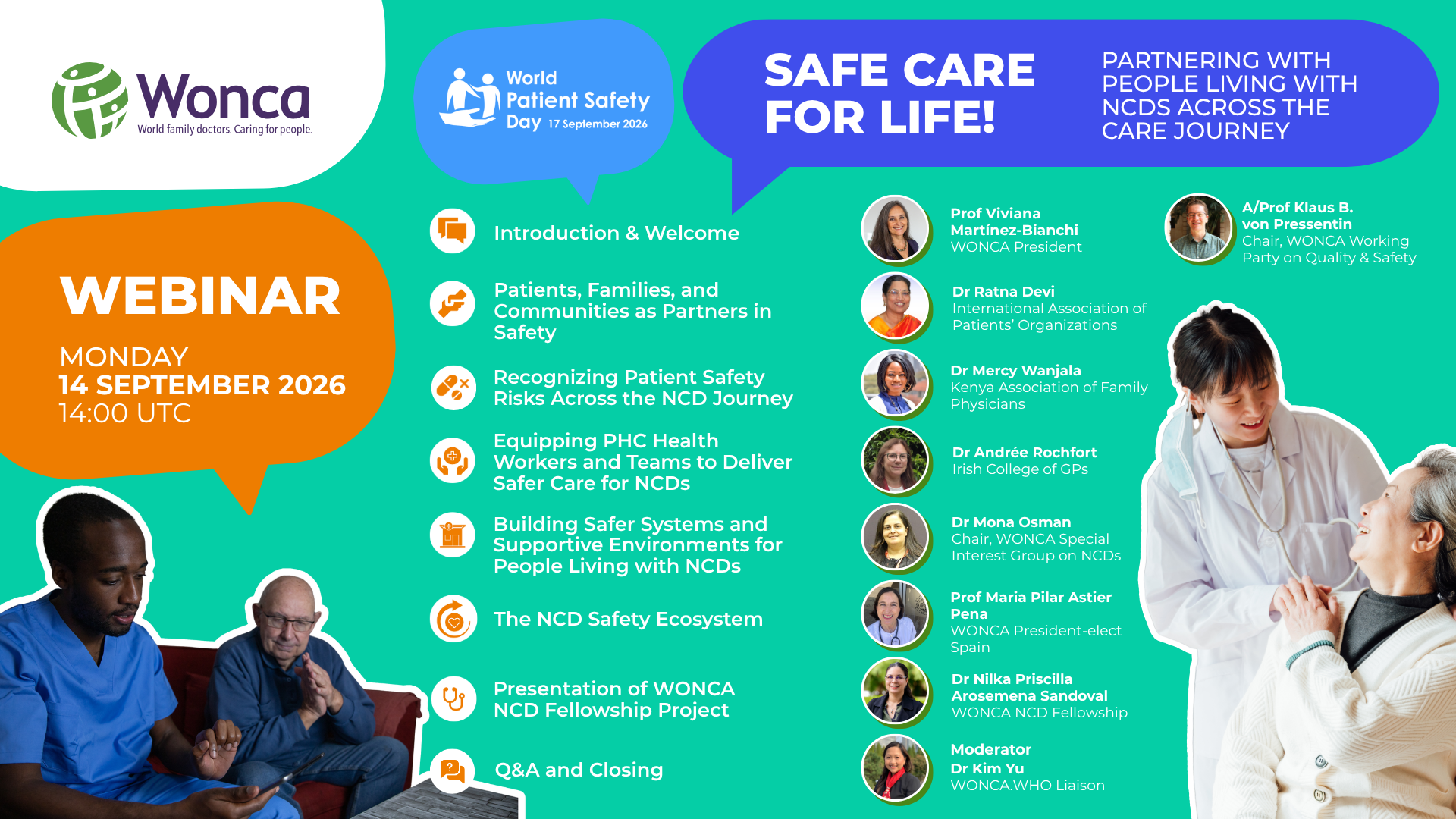
To mark World Patient Safety Day, WONCA's Working Party on Quality and Safety and Special Interest Group on Noncommunicable Diseases are hosting a global webinar bringing together family doctors, health system leaders and patient voices from across our regions.
Date: Monday, 14 September 2026
Time: 14:00 UTC / 16:00 CEST / 7:00 AM PT
Register for the webinar