73rd WHO Regional Committee for the Eastern Mediterranean
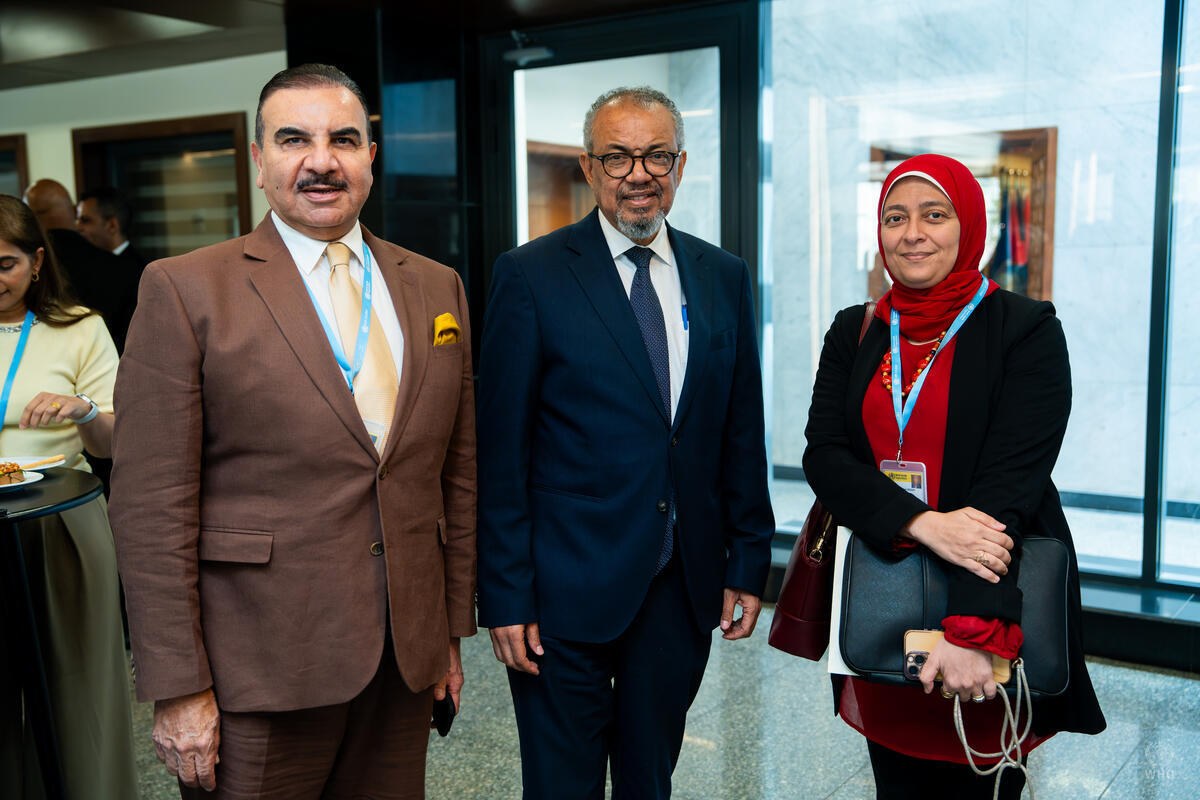 Left to right: Prof Dr Faisal A. Alnaser, WHO Director-General Dr Tedros Adhanom Ghebreyesus and Prof Nagwa Nashat Hegazy. © WHO
Two WONCA representatives brought the voice of family medicine to the 73rd session of the WHO Regional Committee for the Eastern Mediterranean (RC73), held in Cairo, Egypt, from 13 to 15 October 2026.
WONCA East Mediterranean Regional President Prof Dr Faisal A. Alnaser (Bahrain Family Physicians Association, Bahrain) and Prof Nagwa Nashat Hegazy, Chair of the WONCA Working Party on Education (Egyptian Family Medicine Association, Egypt), attended on behalf of WONCA. Each delivered a WONCA intervention to the Committee, and together they met WHO colleagues, ministers of health and partner organisations.
The Regional Committee brings together ministers of health and senior representatives from the Region's 22 countries and territories. This year's agenda included the annual report of the Regional Director, health financing and financial protection, a multi-communicable disease elimination approach, polio eradication and health emergencies, along with progress reports on the health workforce, antimicrobial resistance and digital health. WHO Director-General Dr Tedros Adhanom Ghebreyesus addressed the opening ceremony on 13 October, where Prof Alnaser briefed him on WONCA's work to strengthen family medicine and primary health care.
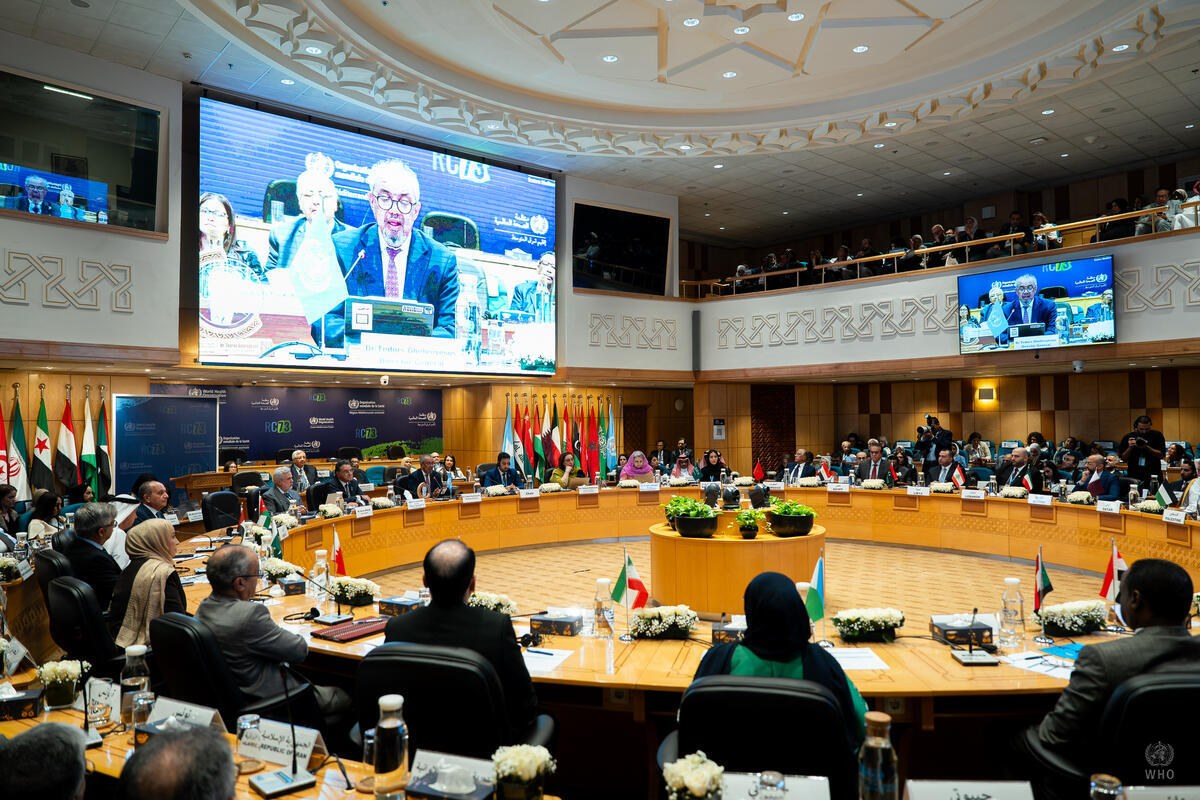 The 73rd session of the WHO Regional Committee for the Eastern Mediterranean in Cairo. © WHO
Working together on health workforce shortages
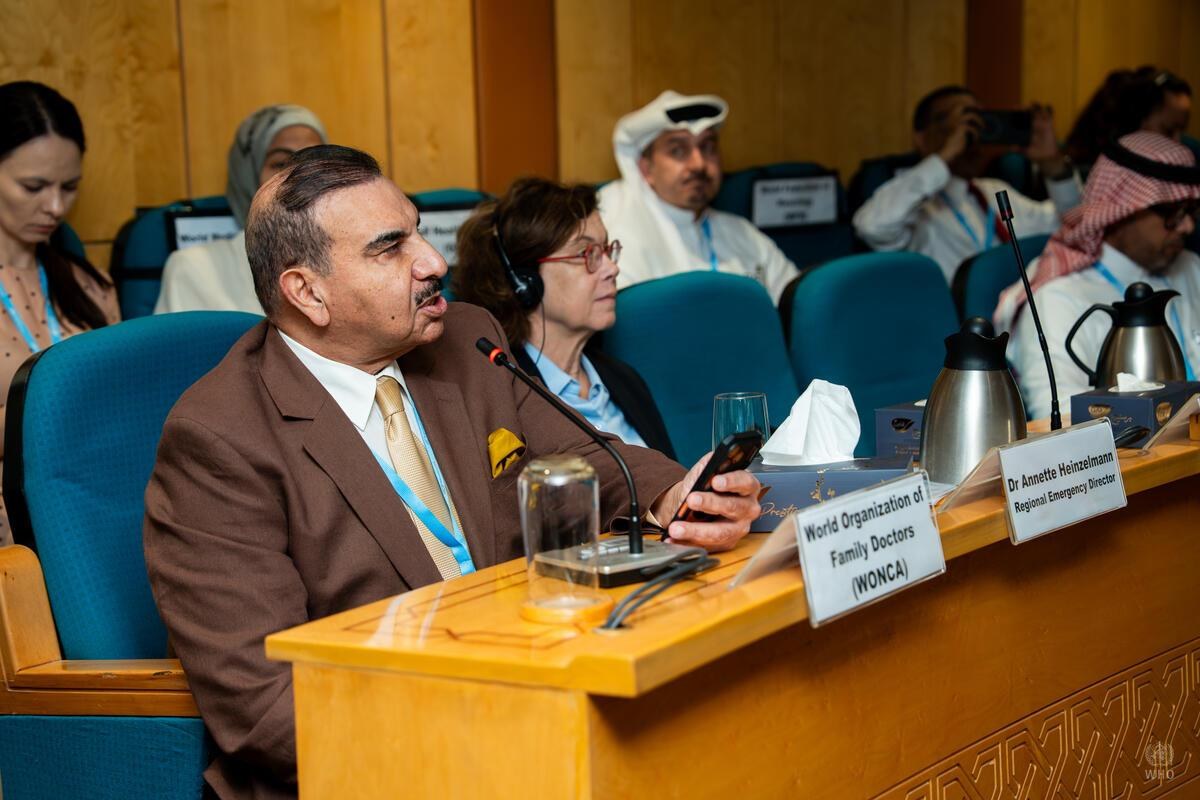 Prof Dr Faisal A. Alnaser delivers WONCA's intervention on the health workforce. © WHO
On 14 October, Prof Alnaser delivered WONCA's intervention under Agenda Item 3(a): Annual Report of the Regional Director 2025/2026 (Document EM/RC73/2).
Echoing the Director-General and Dr Adham Ismail, Officer-in-Charge of the WHO Regional Office for the Eastern Mediterranean, Prof Alnaser said the growing shortage of health care professionals in the Region is a serious challenge to achieving universal health coverage, and that migration, poor retention and inadequate investment in primary health care are making it worse. He proposed closer collaboration between WHO EMRO and WONCA East Mediterranean to strengthen the family medicine workforce through training, professional development and retention initiatives, and called for practical, measurable joint initiatives to address workforce shortages and strengthen family medicine and primary health care across the Region.
Read the full intervention
Family medicine at the heart of disease elimination
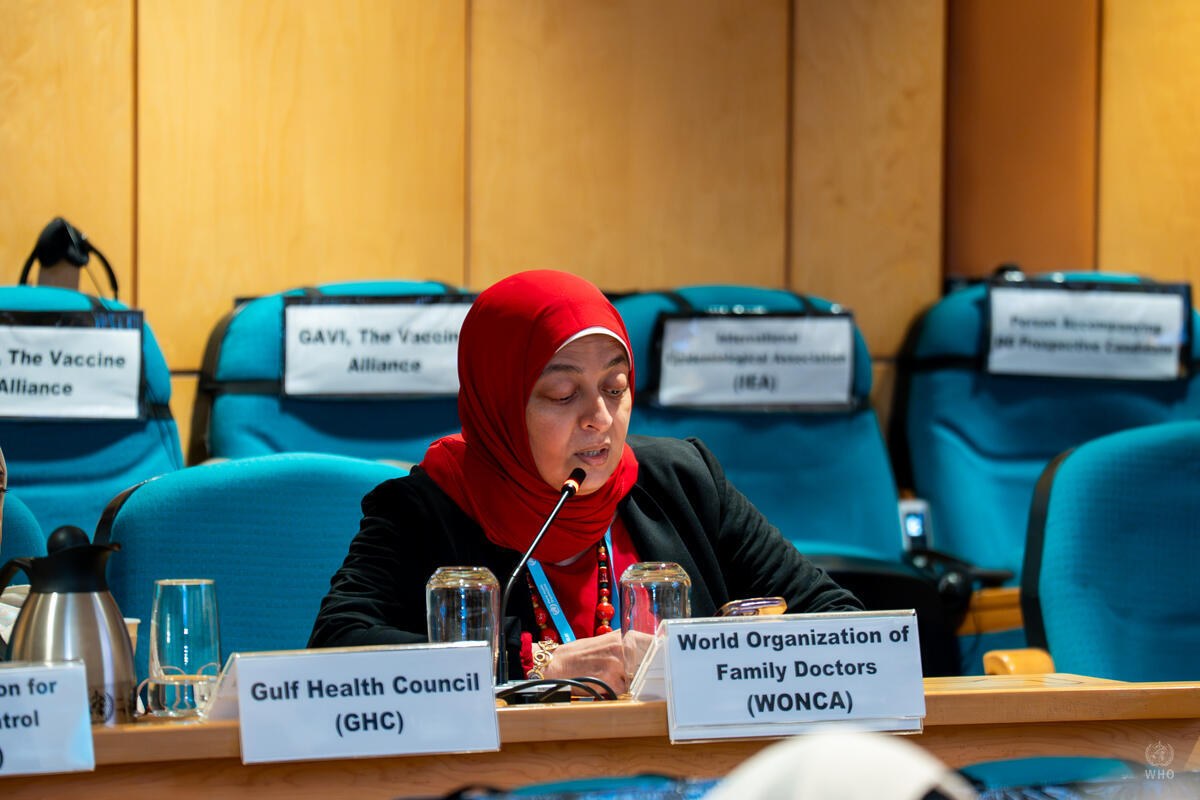 Prof Nagwa Nashat Hegazy delivers WONCA's intervention on disease elimination. © WHO
Also on 14 October, Prof Nashat Hegazy delivered WONCA's intervention under Agenda Item 6(b): A multi-communicable disease elimination approach for the Eastern Mediterranean Region (Document EM/RC73/7), during the discussion of the draft resolution.
WONCA welcomed the draft resolution, noting that eliminating several communicable diseases together requires shared health-system capacity while preserving disease-specific expertise. Family medicine translates integration into practice through first-contact access, comprehensive care, continuity and coordination, linking vaccination, early diagnosis, treatment completion and surveillance with sustained community engagement. Building on its advocacy on vaccine equity, antimicrobial stewardship and outbreak preparedness, WONCA offered to work through its member organisations and professional networks to strengthen family medicine capacity, advance quality standards and share frontline evidence.
The intervention called for sustained investment in primary care teams, in reliable diagnostics and medicines and in cross-border continuity of care for displaced populations. It encouraged monitoring of elimination milestones alongside equitable coverage and continuity of care, so that national progress does not conceal communities still unreached. The Committee adopted the resolution on 15 October.
Read the full intervention
Building relationships with WHO and partners
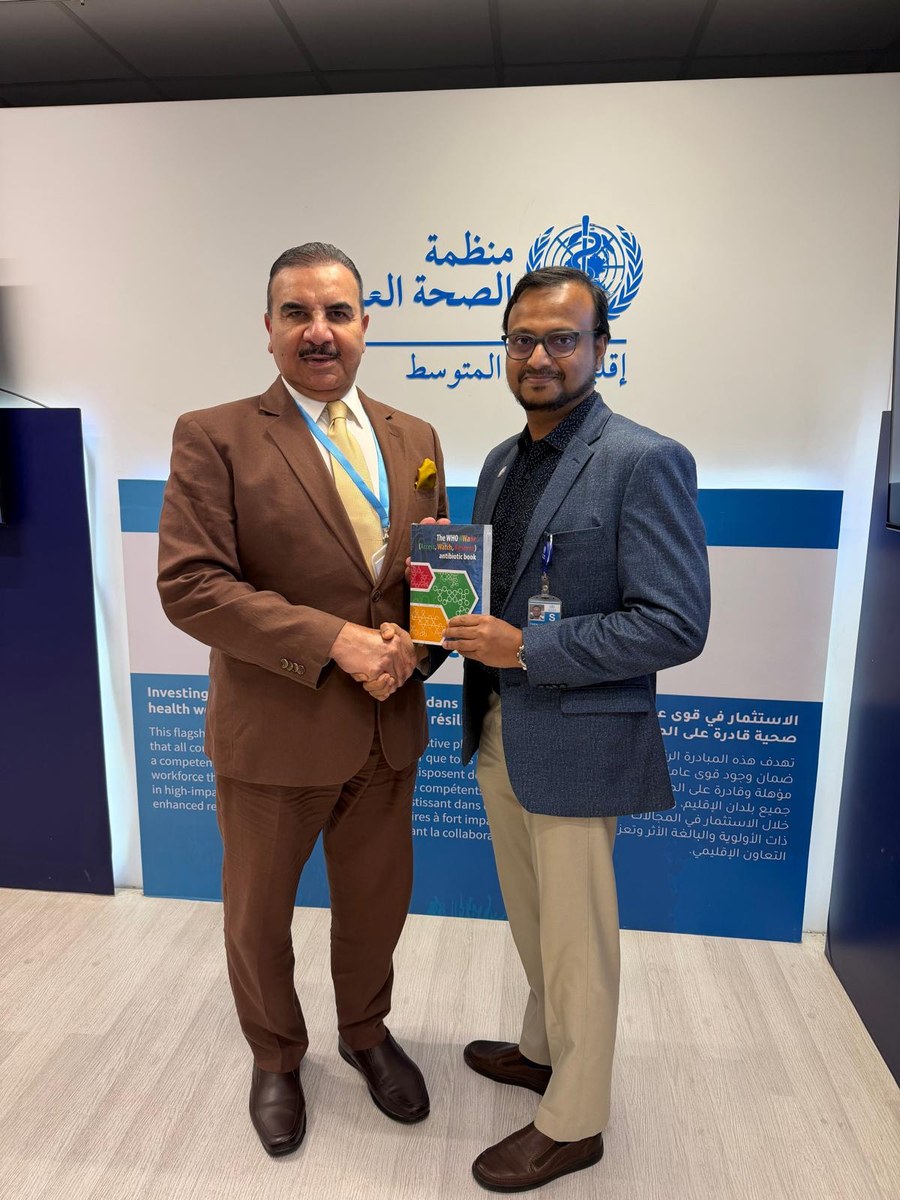 Prof Dr Faisal A. Alnaser (left) with Dr Shaffi Koya, Regional Adviser a.i. for Antimicrobial Resistance at WHO EMRO
Alongside the formal sessions, the WONCA representatives met WHO colleagues and partners to explore practical collaboration.
- Antimicrobial resistance: At the invitation of Dr Shaffi Koya, Regional Adviser a.i. for Antimicrobial Resistance at WHO EMRO, Prof Alnaser discussed how WONCA East Mediterranean and WHO EMRO could promote rational antibiotic prescribing and awareness of antimicrobial resistance among family doctors. Ideas included joint webinars, structured training for family physicians on antibiotic stewardship in primary care and WHO contributions to sessions at WONCA East Mediterranean conferences, beginning with the regional conference in Kuwait in 2027. They also discussed ways to formalise cooperation between WHO EMRO and WONCA East Mediterranean.
- Rural health equity: Prof Nashat Hegazy met Dr Mohamed Afifi, Regional Adviser for Primary Care Services, and Dr Jamal Nasher, Manager of SDGs and Gender, Equity and Rights at WHO EMRO, to discuss collaboration between WHO EMRO, WHO headquarters and Rural WONCA on rural health equity in the Region, building on the Rural WONCA initiative coordinated by Dr Bruce Chater and Dr Pratyush Kumar.
- Health professions education: Prof Alnaser and Prof Nashat Hegazy met Prof Gohar Wajid, Technical Officer for Health Professions Education at WHO EMRO, to exchange perspectives on medical education, health workforce development and shared research interests.
- Women in medicine: They held an introductory meeting with Dr Amany Asfour, President of the Medical Women's International Association, on women's leadership, gender equity and the advancement of health care.
- Medical students: Representatives of the International Federation of Medical Students' Associations (IFMSA) expressed interest in becoming more involved with WONCA East Mediterranean and plan to contact the Regional President about next steps.
Prof Alnaser also met Dr Hanan Balkhy, WHO Regional Director for the Eastern Mediterranean, and the ministers of health of Bahrain, Lebanon, Oman and Syria, as well as the Undersecretary of Health of Saudi Arabia and other senior health officials, to promote the role of family medicine in strengthening primary health care across the Region.
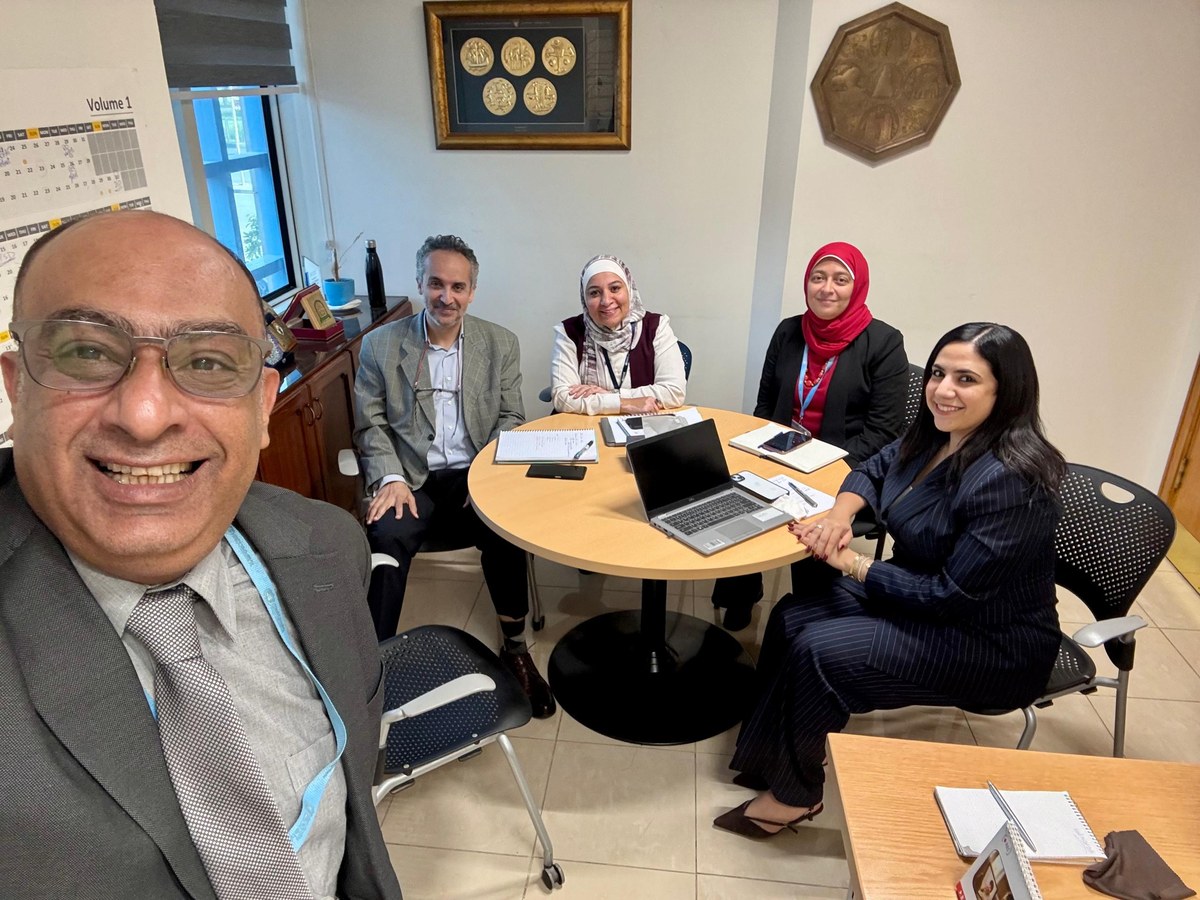 Left to right: Dr Jamal Nasher, Dr Mohamed Afifi, Dr Ragaa Hassan, Prof Nagwa Nashat Hegazy and Ms Yosra Diab
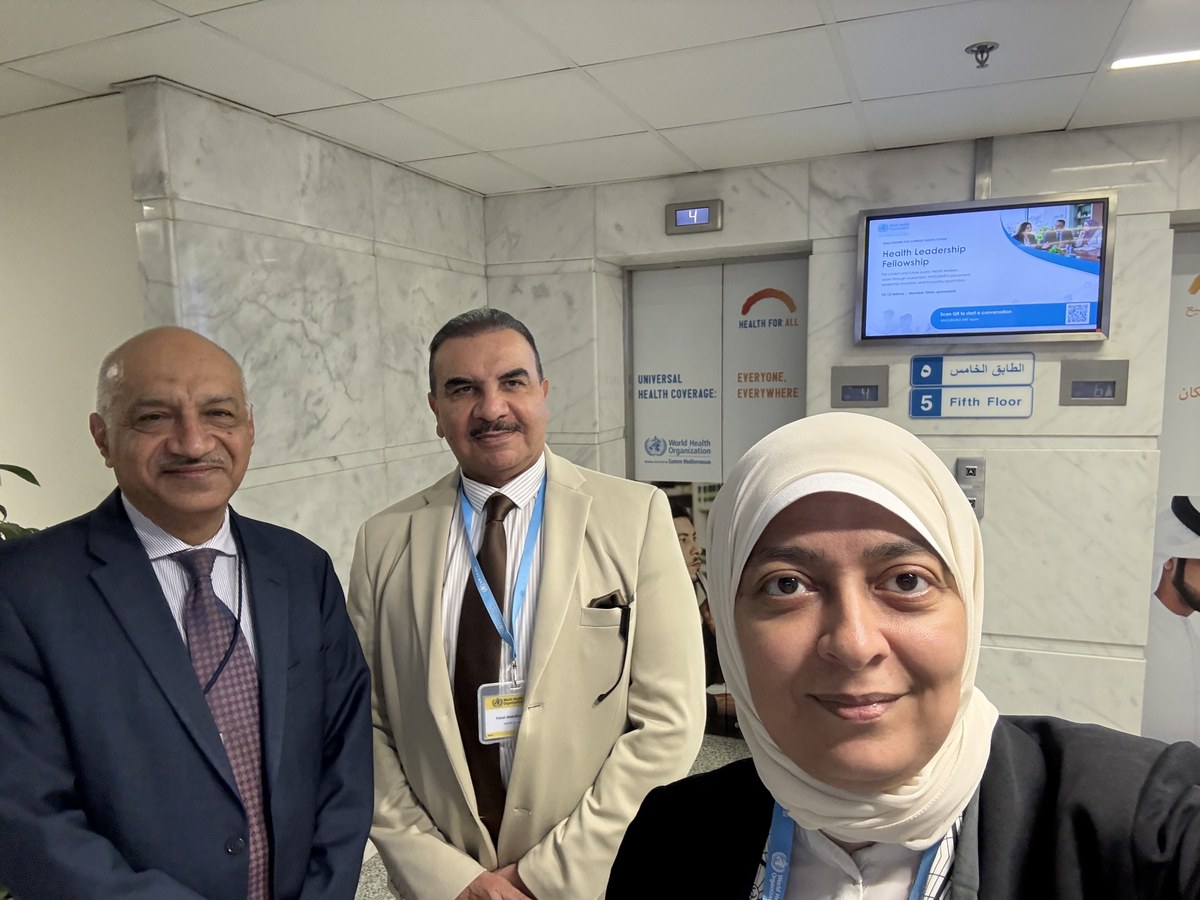 Left to right: Prof Gohar Wajid, Prof Dr Faisal A. Alnaser and Prof Nagwa Nashat Hegazy
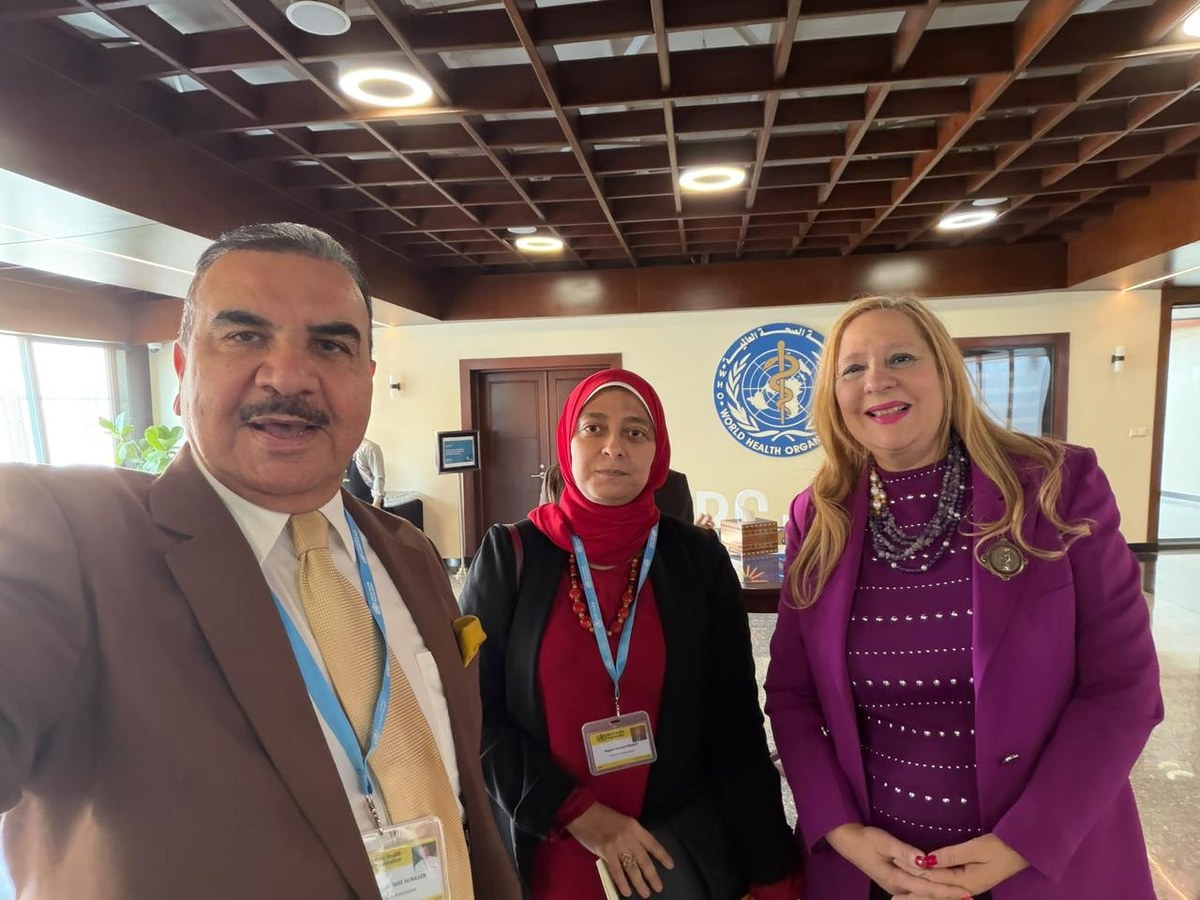 Left to right: Prof Dr Faisal A. Alnaser, Prof Nagwa Nashat Hegazy and Dr Amany Asfour, President of the Medical Women's International Association
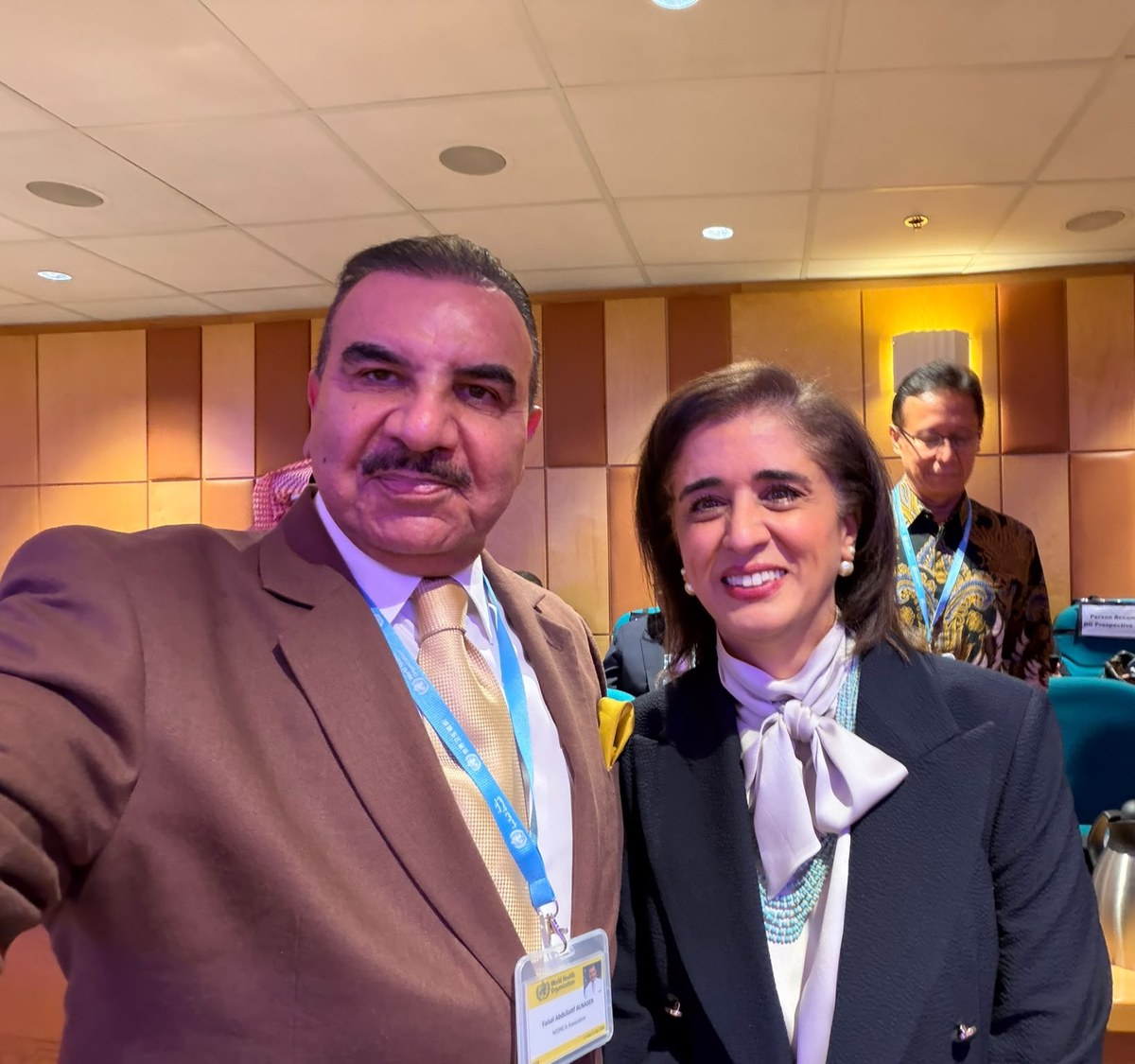 Prof Dr Faisal A. Alnaser with Dr Hanan Balkhy, WHO Regional Director for the Eastern Mediterranean
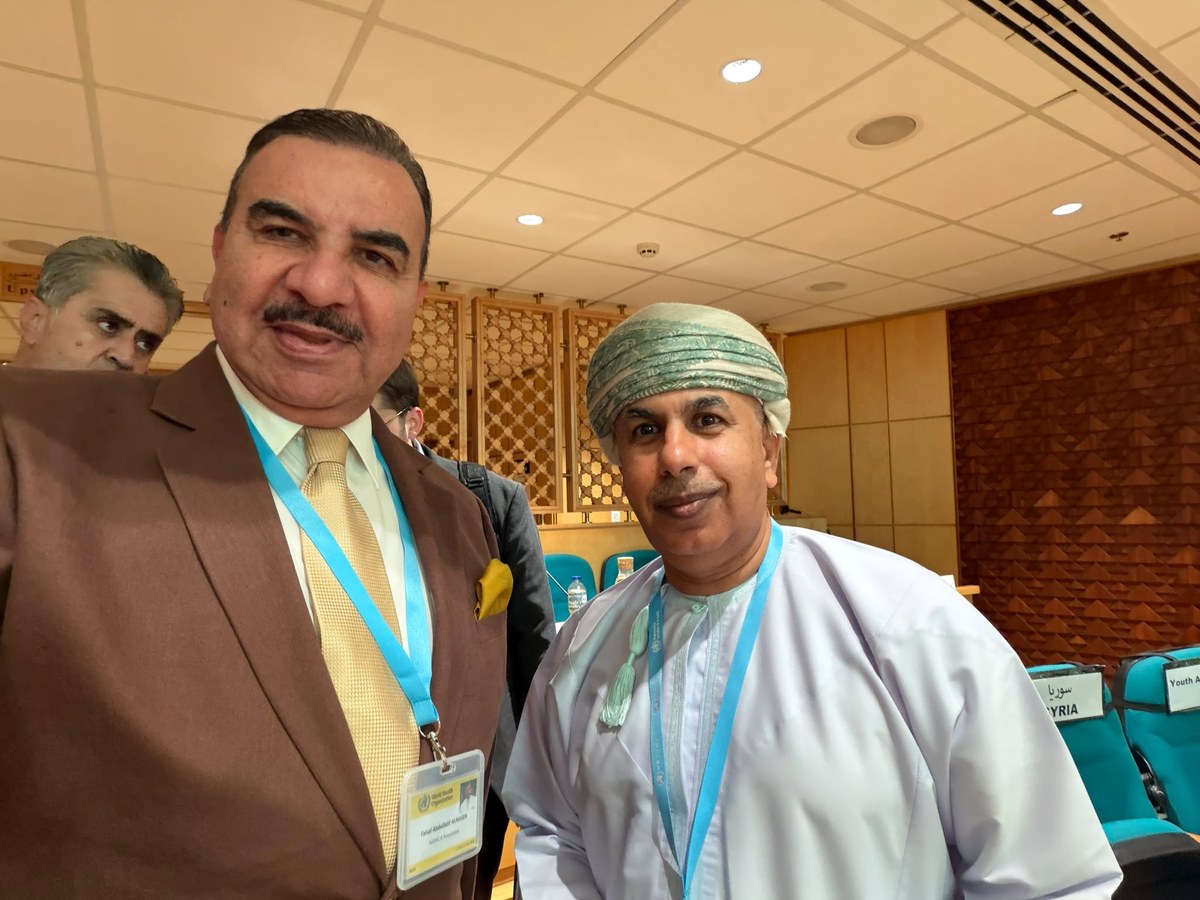 Prof Dr Faisal A. Alnaser with Dr Hilal bin Ali Al Sabti, Minister of Health of Oman
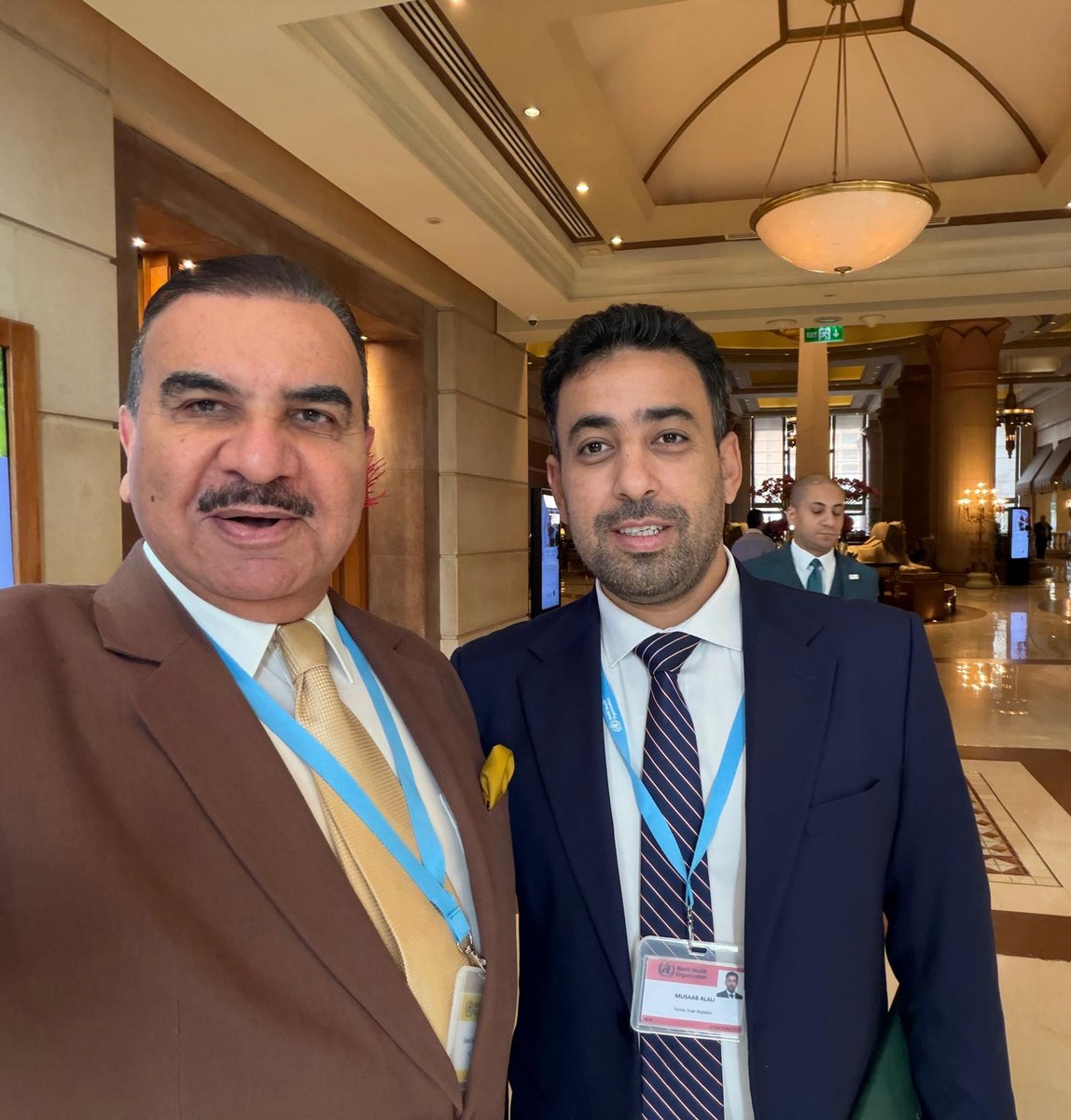 Prof Dr Faisal A. Alnaser with Dr Musab Al-Ali, Minister of Health of the Syrian Arab Republic
WONCA's participation in RC73 was an opportunity to promote family medicine as the foundation of strong primary health care in the Eastern Mediterranean Region, and to build closer cooperation with WHO EMRO on the health workforce, antimicrobial resistance, education and rural health.
Visit the RC73 website
Explore WONCA East Mediterranean
WONCA's statements and interventions to WHO are collected on the WONCA Policy Statements page.