26 March - Social Prescribing Day
From the GP practice to the community garden: why Europe’s cancer recovery plans need social prescribing
A person can complete cancer treatment and still be rebuilding strength, confidence, routines and social connection. That in-between period is where social prescribing can make a real difference. It gives health services a structured way to connect people to non-medical community activities that support wellbeing alongside clinical care.
The SPACE Project (Social Prescribing for Active Civic Engagement) is an EU-funded collaboration bringing together primary care, social care and the voluntary sector to design and test a social prescribing model for people recovering from cancer, with volunteering in urban and community gardens at its heart. WONCA is a partner in SPACE, contributing a family medicine perspective and helping ensure the approach can work in real primary care settings.
“Life beyond cancer”, a mindset shift and a service model
Pro Joyce Kenkre, Chair of the WONCA Europe Special Interest Group for Social Prescribing, describes SPACE as a shift in how we see recovery. “Instead of this being a cancer patient… here is a person who is recovering from cancer, who’s volunteering in a community garden,” she says.
Across five pilot countries, SPACE aims to train health and social care professionals and leaders in the voluntary sector, and to engage 125 people recovering from cancer in meaningful volunteer activities that support physical and mental wellbeing.
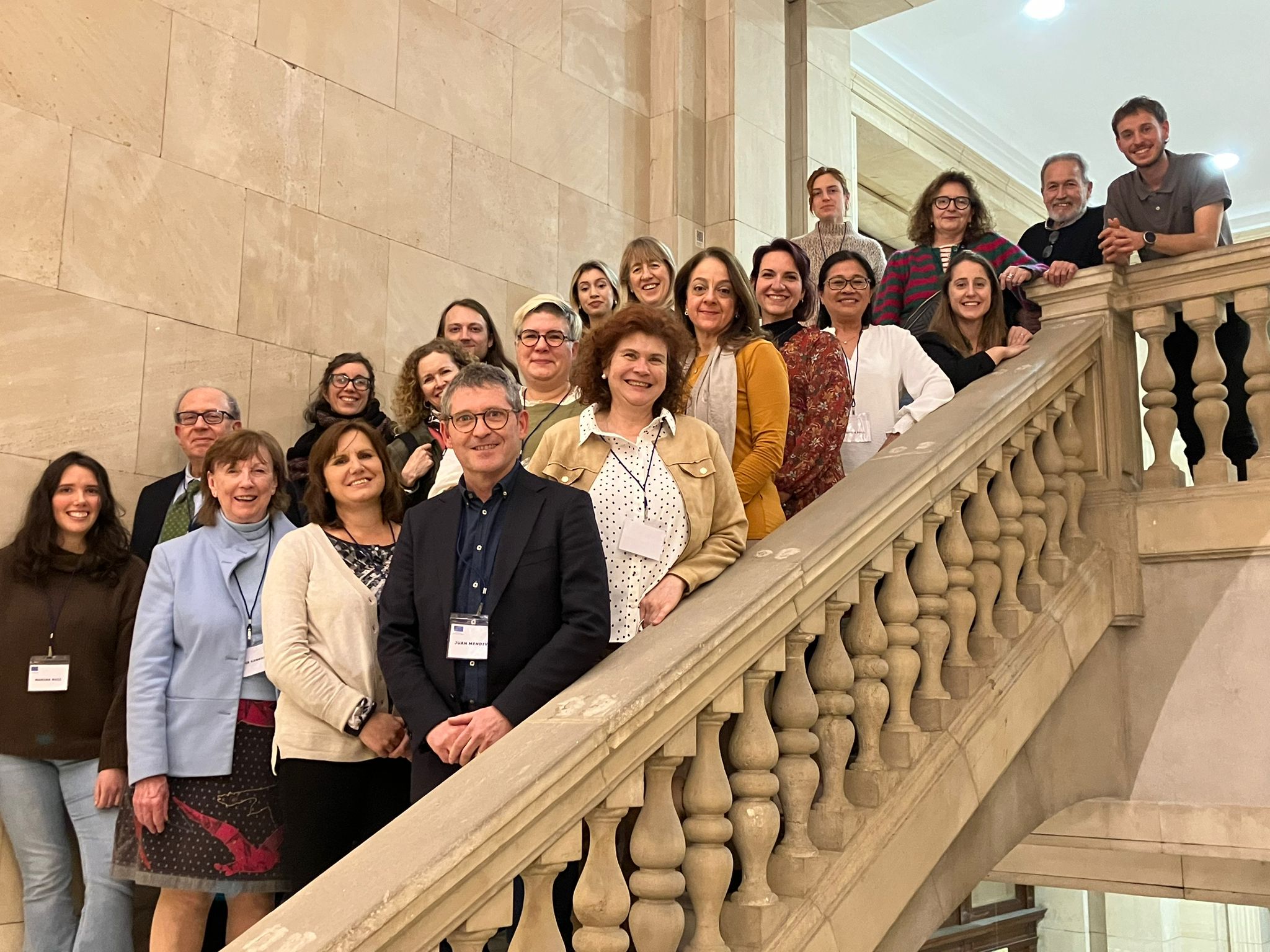
Photo: Representatives from WONCA traveled to Barcelona to take part in the first face-to-face research meeting of the SPACE Project.
How the SPACE pathway works
In family medicine, we see daily that health is shaped by much more than symptoms and test results. Dr Juan Mendive, a family doctor involved through the University of Barcelona, puts it plainly. Communities can be a very helpful tool for better health outcomes, if we build the right link between the clinic and what is available locally.
SPACE is designed to make that link practical. The project team has mapped a clear referral pathway. A clinician identifies someone who could benefit (often a GP, but also potentially oncology or rehabilitation teams). The person is screened for suitability and safety. They are then matched to an appropriate community garden activity. Link workers and community organisations help coordinate participation, while feedback and evaluation are built in from the start.
This structure matters for policymakers. It turns a promising idea into a repeatable service model, with defined roles, training requirements and measurable outcomes.
Why gardens, and why volunteering?
Green social prescribing can look different in different places, but SPACE focuses on gardens because they offer an adaptable entry point to recovery. Gardening can support gentle physical activity, social contact and improved nutrition, and tasks can be scaled to different ability levels, from planting and watering to planning layouts or welcoming others.
Dr Ferdinando Petrazzuoli, WONCA’s representative in the project and a family doctor in Italy, stresses that recovery is not only physical. “If we just apply a medical approach, we tend to neglect” the social and emotional aspects that help people return to work and to a meaningful social life.
The garden environment also has symbolic power. Petrazzuoli describes nature as something that can reassure people, even calling gardening something that belongs to our DNA as patients watch plants grow over time and reconnect with a sense of life continuing.
Volunteering adds another layer. It strengthens purpose, civic engagement and the capacity of communities to support health. For health systems under pressure, that combination, nature plus volunteering, is a compelling proposition.
The policy case: making it sustainable
For social prescribing to be more than a short-term pilot, it must be supported as a system: workforce, training, coordination and sustainable funding. Petrazzuoli is direct about the risk. EU-funded projects can develop tools and evidence, but then the project finishes. To make social prescribing routine, it needs ongoing support from local and national structures, including municipalities, so people can participate without barriers such as transport costs.
SPACE is developing training materials, a quality framework and a policy brief aimed at education and training, civic engagement, EU values and health policymakers.
WONCA’s role is to keep primary care at the centre of this work, because family doctors and primary care teams are often the first, most trusted contact after treatment, and the professionals who see the wider context of patients’ lives. As WONCA’s partnership in SPACE highlights, integrating social prescribing into primary care is essential if we want these models to reach people equitably and at scale.
Looking ahead
SPACE offers an opportunity to build a European evidence base for green social prescribing in cancer recovery, and to demonstrate what is possible when health services and communities work as genuine partners.
The policy ask is straightforward: support models that help people recover not only from disease, but back into life.