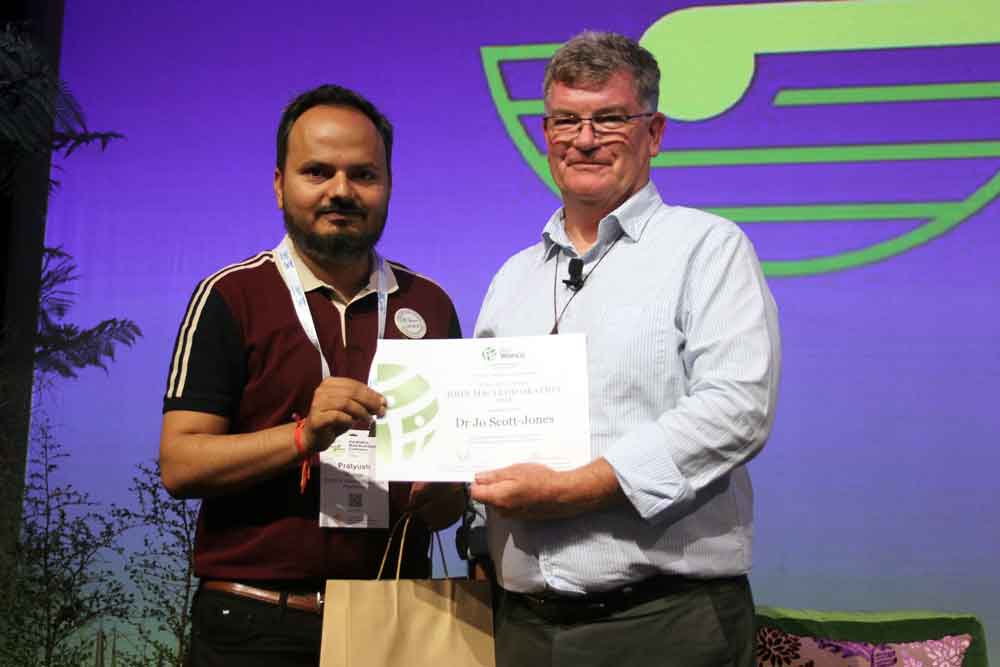
John MacLeod Oration 2026: Dr Jo Scott Jones
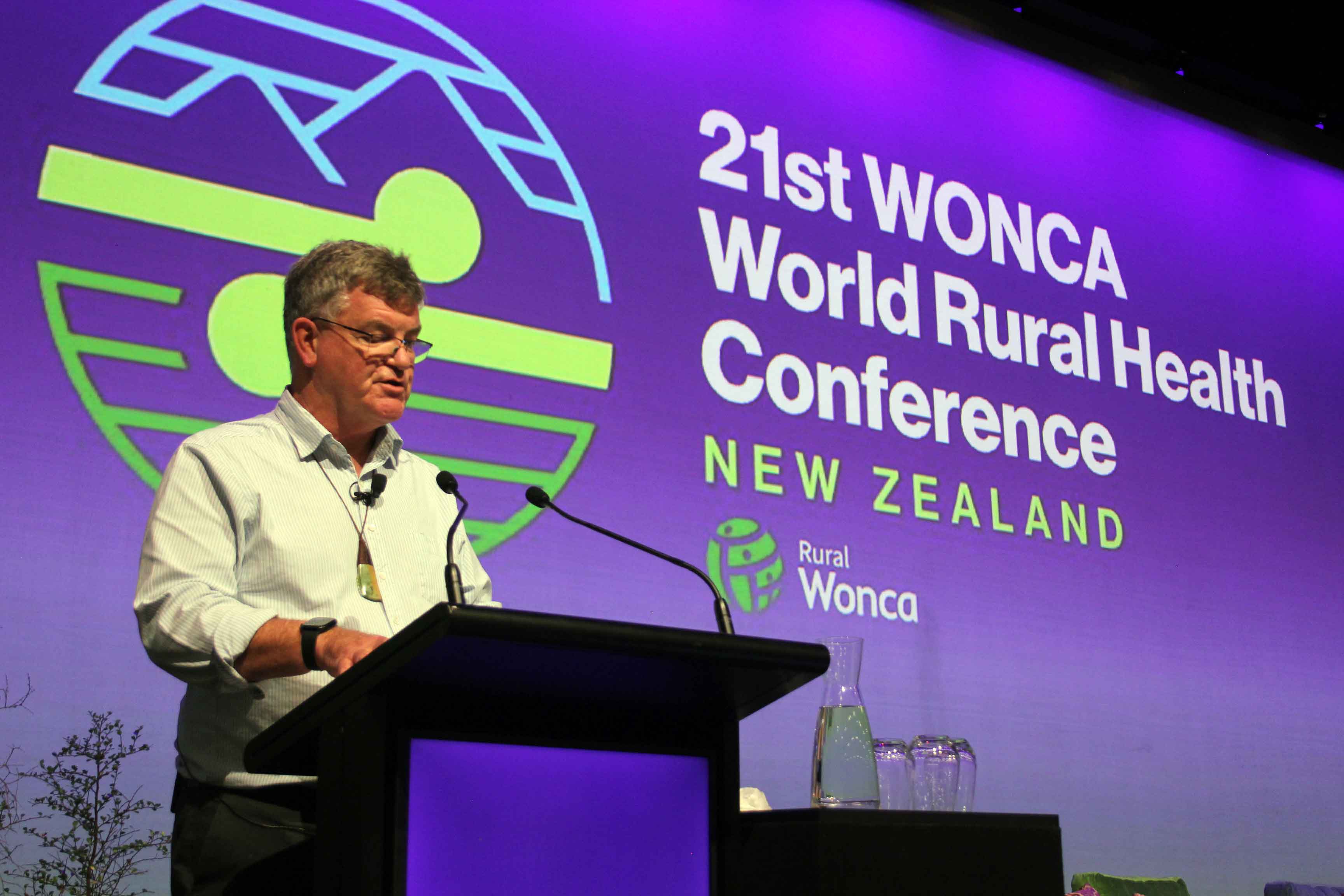
The John MacLeod Oration is a valued tradition of the WONCA World Rural Health Conference, honouring the legacy of Dr John A. J. MacLeod, a founder of the WONCA Working Party on Rural Practice and a deeply respected rural doctor from North Uist, Scotland.
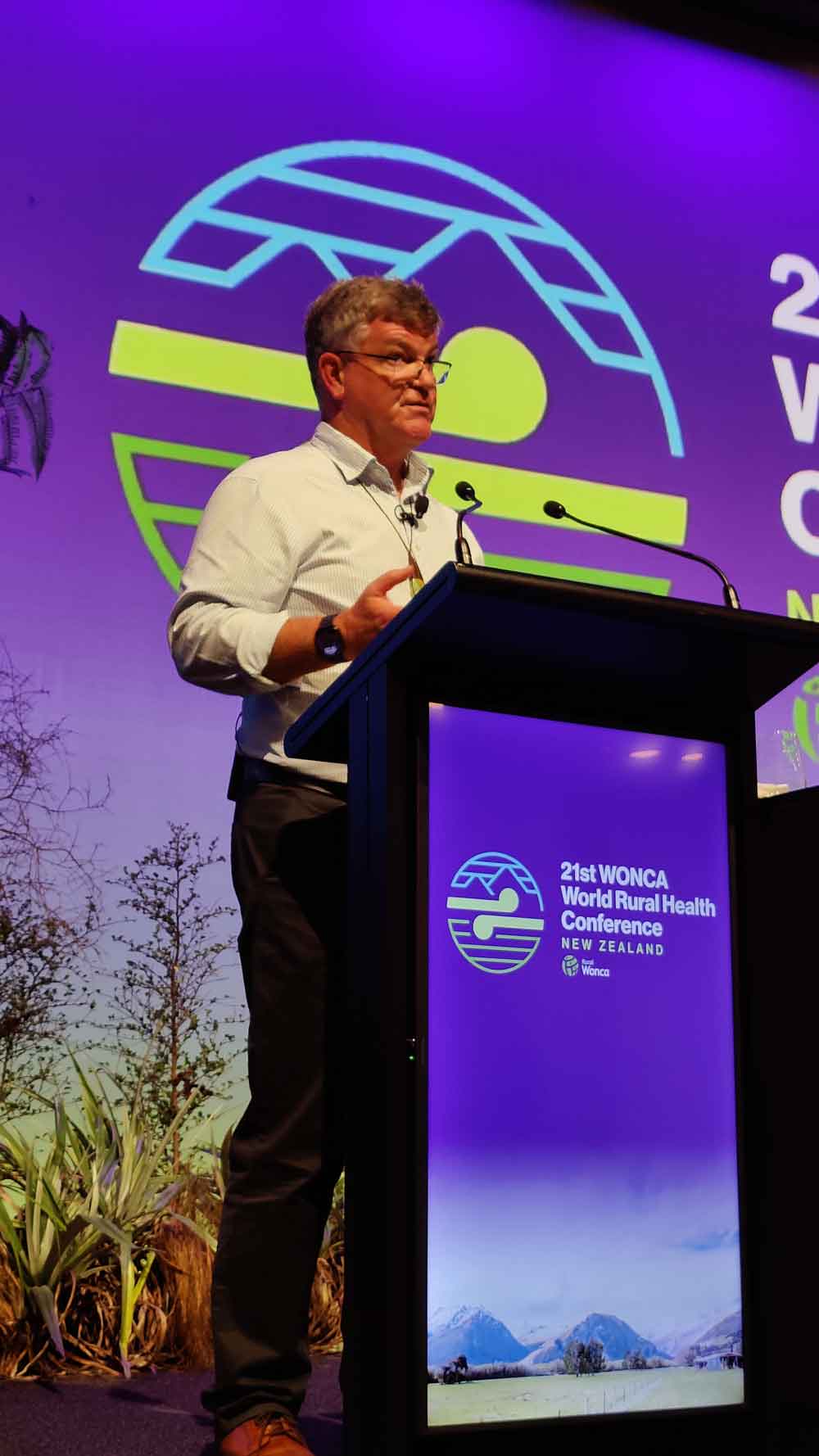
At the 21st WONCA World Rural Health Conference in Aotearoa New Zealand, the 2026 oration was delivered by Dr Jo Scott-Jones, a leading rural GP, teacher, mentor and advocate based in Ōpōtiki, Aotearoa New Zealand.
We are pleased to publish this edited version of the oration. The text can only partly capture the experience, which included music, shared reflection and collective activity. It was a speech that moved many in the room.
John MacLeod Oration 2026
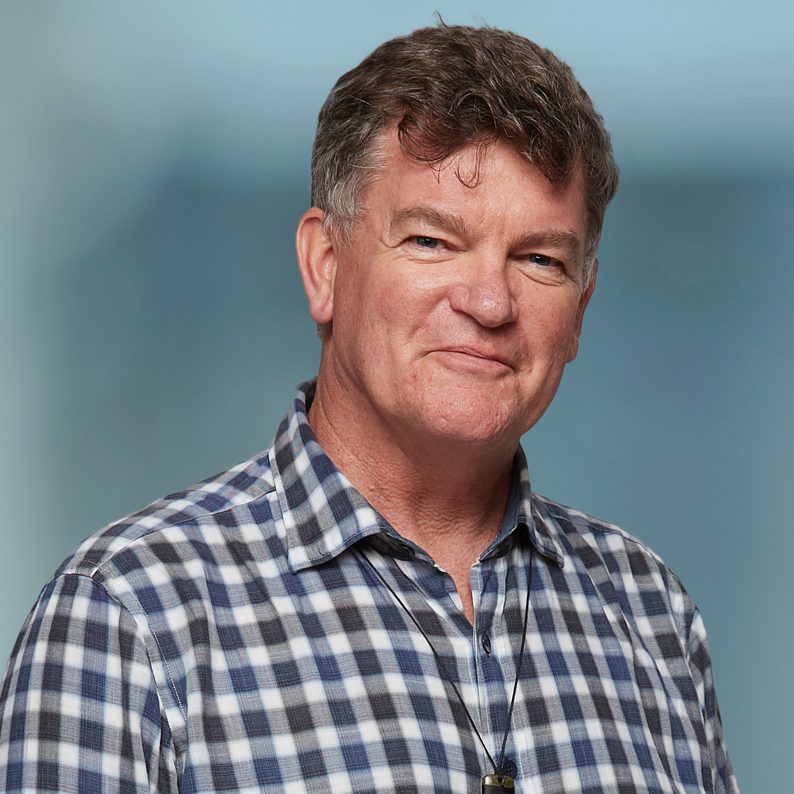
By Dr Jo Scott-Jones
E ngā mana, e ngā reo, e rau rangatira mā,
Tēnā koutou, tēnā koutou, tēnā tātou katoa.
Ko Moel Famau tōku maunga
Ko Mersey tōku awa,
Nō Ingarangi ahau,
Ko Ōhope tōku kāinga rua,
Ko Jo Scott-Jones tōku ingoa.
Tēnā koutou, tēnā koutou, tēnā koutou katoa.
I feel incredibly humble and honored to be here giving the 2026 John MacLeod oration to the 21st Wonca Rural Health Conference. When the then chairperson of the Rural General Practice Network Kirsty Murell McMillan took me to my first Wonca Rural Conference in The Philippines in 2011 I would never have imagined being in the company of globally recognized rural health leaders Ian Couper, Roger Strasser, Barb Doty, Bruce Chater, John Wynn-Jones, Dan Smith, John Gilles, Dora Patricia Bernal Ocampo, who have accepted this challenge in the past.
To say I was daunted when asked is an understatement, but thank you Hauora Taiwhenua, and The Wonca Working Party on Rural Health for the opportunity.
I never met John MacLeod, although as a medical student in the UK I did contemplate applying for the elective he offered. There was something about the island family doctor life that appealed to me. I think the idea that you could be the first port of call for anything, from childbirth to helping close someone’s eyes for the last time, travelling by boat to visit lonely croft dwelling families and give the immunisations, removing tonsils on the kitchen table that my naive and as it turns out desperately devastatingly easily seasick young brain thought was heroic.
He was a hero to many here who knew him. The reality of being a family doctor to a remote rural community was undoubtedly heroic at times but speaking to those who knew him he was incredibly humble about the work he did, and fiercely loyal to his family, and the community he was part of and served.
John was one of the Founders of the Wonca Working Party on Rural Practice and clearly gained and gave huge support through connecting with like-minded people, working to further access to high quality health services to communities like his across the globe.
I am told he would always contribute to conferences he attended. Why would you ever just go and listen when you can add to the conversation and share something of yourself and your experience with others.
There is so much I could share with you – we could talk about the workplan of the National Clinical Network on Rural Health that I co-lead with Neta Smith nurse and hospital manager from Kaitaia, we could talk about Rural generalism in New Zealand, training the pluripotent health professionals, community pathways for training, the Waikato Post graduate medical school, the need for community based medics in the future to be able to “treat the whole town” as Rod Martin said, yes, more skilled in procedures, point of care testing, team leadership, clinical supervision, teaching and training but also trained in place, for the context they serve. We could talk about how we enable them to do that job.
We could talk about advocacy and why it is one of Wonca’s defined functions of a family doctor. We could talk about the “vomit principle” - if you have a good idea you have to share it everywhere, all the time, over and over, until you think you will vomit the next time you say, it before someone with power will say “I’ve had great this idea” and tell you what you’ve been saying all along, at which point you swallow your vomit and praise them for their fantastic innovation.
But, I think all of these things are being covered in other parts of the conference so at this point I’d like us all to make some connections with each other, I am sure that is what John would hope people get out of attending a Wonca Rural Conference.
Make Connections.
The “hongi”, a traditional Māori greeting which involves the coming together of two people by putting nose to nose and forehead together sharing the “hā” breath of life, and in some cases acknowledging those who have passed by doing two nose presses. It symbolises unity, equality, and the exchange of souls. Its origins are linked to the creation of the first woman Hineahuone (meaning earth-formed women), who was given life by the god Tāne through breath through her nostrils.
In some traditions, women and men do not hongi, instead sharing a cheek touch “kiss” like you see the French do.
If you are willing to participate and you would like to experience doing a "hongi” or if you would like to observe first, that's fine.
(Willing participants at the conference were asked to turn to their neighbour, take their right hand as if they were going to shake it, and to slowly come together to form a strong link, and then to begin to move forward preparing themselves, for the pressing of nose to nose and at the same time the touching of foreheads. They were asked to Pause, breathe in, and break).
Thank you for participating in the “hongi” experience. Please be prepared to connect again with your neighbour as we move through this together.
The images accompanying the oration came picture gifted to our surgery in Ōpōtiki by Dr Emily Cole ( Te Rarawa ) now a GP and Urgent Care doctor in Auckland, but in 2015 a trainee intern with our team for six weeks. Trainee Interns are asked to leave something tangible with their surgery; many will undertake an audit or produce a useful patient information leaflet. Emily produced this. She told us it tells the story of the place of our surgery in caring for the people of our community. I’d like you to see in it your place of work, think about the people you serve, and the history and culture of your community.
In the beginning there was Te Kore, nothingness or untapped potential. Ranginui, the sky father, and Papatūānuku, mother-earth lived together with their children, living between them, living in darkness until one of the sons Tāne Mahuta decided that he wanted to separate his parents. Tāwhirimātea, God of war was the only son who opposed but was unsuccessful. From Te Kore (nothingness, untapped potential) and through the separation by Tāne came Te Ao Mārama (a world of enlightenment).
The arrival of Tangata Whenua, the people of the land – travelled to different parts of Aotearoa with some landing or travelling to the Ōpōtiki district from Hawaīki by the waka (canoe) Mataatua. The first ancestor, Tarawa, is said to have been left behind and followed his whānau by swimming to Aotearoa. When he arrived on the shores of Ōpōtiki, he released two pet fish into a spring east of the Waiōtahe river, giving the name Ō- pōtiki-mai-tawhiti (the pets from afar) to the township.
After a long period of Māori settlement, the white heron symbolises the arrival of Europeans and Te Tiriti ō Waitangi. This is followed by a narrow red line, representing the blood lost in the period known as the Māori wars. The Pōu symbolises the persistence and importance of Māori culture in the region.
We then see a change from native bush, and Pōhutukawa to agriculture, the production of kiwifruit, dairy, and the arrival of modern times symbolised by the road.
Our surgery has its place now looking back, acknowledging this history, and protecting the people whose story is told here.
This picture has pride of place in our waiting room, and I think every member of our team considers it part of the fabric of our place, a taonga or treasure that encapsulates our purpose and responsibility.
I started the oration with an introduction to myself in Te Reo Māori.
Like the hongi, this too is about making connections. Whakawhanaungatanga, making connections is a core part of “tikanga” the traditional processes and protocols that guide Māori society.
I shared my mountain, Moel Famau the northernmost tip of the Snowdonian ranges in North Wales, a place of near pilgrimage for me and my family since early childhood, a hazy hill on the horizon if you look South from the banks of the Mersey, the river that runs through the town of my birth, Liverpool in England.
I shared that my second home, as you can never really take a scouser out of Merseyside, is Ōhōpe, where my family home looks out over the Eastern Bay of Plenty to Whakaari, White Island, so tragically in the international news after an eruption when 47 tourists, 22 of whom died were caught in an eruption in 2019.
This form of connection, of sharing something about the place you come from, the people you affiliate with, your family connections, allows a glimpse into your world to the person you are speaking to.
I have found that in my day-to-day clinical work, the simple use of an mihi like this as an introduction transforms consultations with my Māori patients. I hope it shows respect, and a desire to have a shared understanding of the world, to show that I want to understand and am prepared to try.
(Willing partcipants were now asked to turn to the people they had just shared a hongi with and to share with them something about the place, the landscape, they came from. They were asked to think about the common ground between them, where their paths have crossed.)
This is my first take away call to action.
Make connections with the people around you, if you have connections already, nurture them, make them deeper and stronger, sharing something of yourself with others every day can feel awkward, particularly in English culture we are often taught he dignity of silence and how strong people can stand alone, make a conscious effort to stand beside and be there for others.
Understand your community.
The majority of doctors working in rural communities in New Zealand, and I suspect in many other parts of the world are not from the place they serve.
I arrived in New Zealand planning a 6 month “holiday job” attracted by a Netscape pixelated picture of a banana palm on Ōhōpe beach, and the promise of surfing in the morning, skiing in the afternoon and hot pools in the evening.
Ōpōtiki when I landed had a 35 bed hospital where I was the only doctor on call overnight, sharing a 1:4 roster with fellow GPs who provided anesthetics, I did the intrapartum obstetrics and neonatal care, we had a red phone on the desk that rang if anyone in the district rang 111 for an emergency, and would advise paracetamol for their toothache, or we would contact the ambulance and dash out to their home to manage their acute coronary. I was staffing the emergency department and running a busy general practice in a community that was 60% Māori, with several elderly patients who needed to bring relatives to translate for them as Te Reo was their only language.
My introduction to Māori culture when I started work was a few hours with a local social worker, who was Māori and told me some basics of tikanga, take your shoes off before going into a house, don’t sit on tables, try not to touch people on the head. Her main message was to just listen and do your best. She told me people would be grateful if I was there and as long as I was not openly rude, I would be fine.
I recall my first visit to a Marae, vividly. I was maybe 3 years into being a GP in Ōpōtiki when my young male patient died of his myeloma. I had cared for him and his young family throughout this rapidly progressive illness, but in the last week I had been away on holiday with my family, and I had not been there for them in those final days. I felt awful as I had promised them, I would do my best to manage his pain, I knew this would be hard, and the colleague who took over from me said his death had not been a good one.
I felt a deep need to talk to his wife and express how sorry I was for her loss and was told the funeral was underway, I knew it was a three-day process, and I asked my practice partner, another Pākeha GP if I should attend. He thought it would be OK, if I wanted to, he had never done that, but he didn't think the medical council would object.
I knew there was a protocol so I bought a book from the local shop, ( OMG when I tell this story I cannot believe I didn’t ask one of my Māori patients or staff – this was a long time ago, before we had a kaumatua as part of our team at the surgery.)
I made my way to a marae at the back of Ruatoki, beyond any tar sealed road, for about 3 km beyond anything other than a farm track, to find myself the only pākeha in a massive congregation of maybe 500 people entering and already on the marae grounds.
I was welcomed on, by myself and faced a whaikōrero ( formal speech ) for the first time, completely unaware to what was being said, after a waiata I knew from my book it was time for me to speak, which I did in English, I spoke about who I was, where I was from and my respect for the people and culture of this place, I apologised for not knowing how to behave properly, and explained what had driven me to be there that day. I was alone as I sang Amazing Grace as my waiata. I was allowed to enter the Whare Tīpuna ( main house ) and pay my respects to his tīpuna ( his body ) and his wife and was then taken into the Whare Kai kitchen afterwards for kai ( food, there is always food ! )
I had caused a lot of curiosity and was subject to a lot of questions and some challenges. I had not been there for him; his end days had been painfilled and undignified; I had let him down. But one kuia talked to me about what had driven me to attend, she thought I had been quite courageous. She described the drive I had felt as a calling from his spirit, to do exactly what I had done, atone for my failing, to acknowledge his distress, to apologize and offer support for his wife.
She told me had I not listened to that call his spirit would have had more difficulty travelling to Cape Reinga and Te Rerenga Wairua to slide down the roots of the ancient Pōhutakawa tree into the sea and back to Hawaīki, and who knows what would have happened had his spirit not made that journey.
My clinical work was full of stories of what can go wrong.
I recall observing the powerful impact of a tohunga ( māori healer ) performing karakia (more than a prayer) over a man, to my eyes in the midst of a psychotic crisis, rolling backwards down the main street in town halting traffic ( we don't have much ) and yelling about becoming his own ancestors.
I remember supporting the mother of a child with uncontrolled epilepsy who, like generations before her in that whānau she was gaining tohunga powers each time she had a fit. Once this process was complete, the whānau would allow us to start medications.
This link between the spiritual and the body is challenging, but I slowly came to understand that it is very real for the people we care for, indeed for all of us.
I was there for the community, battling on their behalf for more services, trying to consolidate the four practices in the small town into a more sustainable model of care. I became and remained passionate about providing rural people with access to high quality, comprehensive, continuous, coordinated first point of contact community care.
I was an expert in a particular model of health, my training had embedded in me a consideration of the biological, sociological, spiritual and psychological aspects of the person in front of me, but as a General Practitioner, or Family Doctor, I had also been trained to see each person as part of a family, and each family part of a community.
I had not quite grasped how the bio-psycho-socio-spiritual model of health was made more complex as it is in many indigenous world views by different concepts of whānau, which is much more than family, whenua – the word for both “land” and “placenta” often buried by your parents in your tūrangawaewae – the place where you stand.
Connection with the land does not define it, tangata whenua - people are of the land.
I was struck by this when doing a home visit once high in the Waiotahi Valley and asking my elderly dying patient about where he would get his family support in the last months of life. He took me outside and pointed at each surrounding hill in turn and told me the stories of his ancestors looking over him.
I hadn’t understood how the collective, the community, and its wellbeing was so closely linked to the health and wellbeing of each individual; I was treating and how they were connected to that place.
My advocacy work similarly was challenged by my ignorance and naivety – trying to organise an outreach immunisation nurse to visit patients across four iwi rohe, by this time I was at least working with a Primary Health Organisation with a partnership with one iwi, but totally naive to the facts of iwi relationships and how vital it is that everyone’s mana is respected.
Looking back, I can better understand the Māori doctor who called me a racist in the heat of one of my attempts to consolidate our four clinics into my vision of a single unified service for the community.
To be fair to the younger me, I was trying to listen, trying to engage hearts and minds and identify the common ground we all shared of workload, workforce and funding pressures. I was prepared to shift power to a collective approach and wanted everyone to come on board.
But I was only vaguely aware of the ongoing impact of colonisation in the community, had no idea that those kaumātua and kuia whose only language was Te Reo had suffered so much at the hands of people like me who had a vision for the way things should be. I had no inkling of iwi politics, boundaries, tikanga (customs and tradition) and kawa (practice and protocol) and the differences between people of different iwi.
I could go on, and probably have already too much, but my second takeaway and call to action is to all of us overseas clinicians and those of us who work in communities that we do not come from.
It takes time and effort, cultural understanding and cultural confidence is a journey that never has a clear ending, I know I am still a novice and apologize again if I cause offence. It is not my intention.
I try to be aware of my limitations, of how easily I get things wrong and my need for guidance at every step, but I would implore you to seek that guidance.
The main theme of this conference is Mātauranga Māori, and how we weave indigenous knowledge into the ways we learn to be clinicians – how we as a whole community can be enriched and thrive if we can flex our skills attitudes and behaviors to be porous to other world views.
Yes, for the most part, listen, be kind, don't be rude, do your best and you will be fine, but you will be so much better and so much more effective in your work if you connect with your community and humbly start at the beginning. Be genuine and authentic – in Te Reo Māori, Pono and Tika. Learn the language of the people you serve, at least some basic elements. The way we speak is a window into how we think, where we come from, and how the world looks through our eyes.
Be Passionate
I think I would have liked John. He always contributed.
I am probably here because I recognize I have always tried to fill awkward silences and been happy to start conversations going.
An early illustration of this was during “Caring Church Week” in the all-boys Catholic school I attended in Liverpool, a week when members of multiple catholic orders of monks came and did a careers talk trying to attract us to being a Jesuit rather than join the De La Salle Brotherhood, in the long silence after the be-frocked priest asked if there were any questions, my hand went to fill the silence and start the conversation with “what does a normal day look like for a monk?”
I think they still send me postcards and invitations to join up although I’m now happily married, had 6 kids, and live 19,000 km away.
I asked a similar question at the first Annual General Meeting I ever attended, at a New Zealand Rural General Practice Conference in the early 1990’s and ended up on the board, from which time onwards I have grown and learnt and had amazing opportunities in the advocacy and leadership parts of my work as a doctor.
And this leads me to the third call of action I want to make.
When Tarawa was left behind in Hawaīki, he didn’t just hang around and get on with living life there. He packed up his pet fish (which I think were probably more “dinner” than “pets”) and followed his whānau. He chased his passion across the ocean.
We need you to follow your passion, if that is to fill the silences and ask the apparently dumb questions everyone else is thinking, but reticent to ask we need that.
If your passion is to do deep dives into the why and how and what through research, we need that.
If your passion is passing skills on to the next generation of clinicians, we need that.
If your passion is to work to create a system that is fair, equitable, and offers support to providers and patients alike, we need that.
If your passion is to become the complex, courageous, concerned clinician who is there for your community 24 / 7 365 and able to do most things and work out how to get done the things that need to be done, we need that.
Rural communities need people like you to be there for them.
This conference has been all about those passions.
We brought our fish from afar and shared them. Let’s support each other to build them into a shoal that will nourish us into the future.
Keep connecting and working together long after the conference is over.
Build Joy
My final call to action is to seek joy in your work.
In the painting our surgery looks out over the community and carries a responsibility to care for the community, but it is not always easy.
I went through a period of time where there was no joy in my work.
I was burnt out, battling my Primary Health Organisation, my District Health Board, my colleagues, trying to maintain an after-hours service for our community. I was doing a 1:2 on call with my colleague Lailani Mondares, GP extraordinaire from the Philippines who is now the managing partner in our practice.
I was tired of it all, angry at the system that was letting us and our community down so badly. I had even started to look around for alternatives, to escape.
And in the midst of this one day I was called by a renal specialist who told me that if I had admitted my young female patient when I had seen her with what I thought was a UTI, he would’ve been able to save her kidneys. As it was her Goodpasture’s Syndrome had run rampant and she was now going to need a lifetime of dialysis or renal transplants.
He thought I should know as GPs in his experience don’t think about these sorts of things enough when they see patients, and we should be more careful.
I cannot tell you what I would say to him today if he rang me with the same story, I am in a much better mental space, behind the expletives would be an effort to remind him that I see, or honestly now our nurses see, multiple women every week with UTIs and if we were to send every one of these to hospital in case they had Goodpasture’s syndrome we would be under review by the Medical Council for incompetence and hospitals would be totally overwhelmed.
At the time I thanked him for the feedback, put the phone down and literally lay down on the floor and started crying and could not stop. The staff called in my colleague Dr Sam Koster to speak to me, he sent me home and took over my patients for the next 2 weeks, dropping his own plans ( Sam is a farmer who happens to have a medical degree, and is exactly the person I want to pull me out of a car after I have had a collision with a logging truck.)
It’s a long story but after 2 years investigation the Health and Disabilty Commission who investigate such things and hold us to account, eventually exonerated me, they even said my note-keeping was excellent, although I know I sound like Trump and the Epstein files right now.
However, during this time my clinical courage had gone out the window, I was broken. I would cry in the car on the way home from work each night, thinking occasionally about letting the vehicle drift into one of those oncoming logging trucks.
For those of you that have been there, or are there right now, kia kaha – be strong, kia māia - be brave, kia manawanui – be steadfast.
I know there are many of us, perhaps most at some stage in our careers, going through something similar. I share this story to encourage all of us to acknowledge our vulnerabilities, the times when things don’t go well, the mistakes, the harm, the hurt, and through this connection with others, to move on and improve.
One of my responses was to try and understand what brings us joy at work, and to try and restore that in my own life.
There are many facets of course, but i started to ask colleagues at conferences, and using a cellphone to record the conversations which I collated and shared through a podcast. I would do this at NZ conferences, and at Wonca Conferences globally, eventually reaching a saturation point. It was fascinating but perhaps it should not have been surprising to me to find that across the world the same sorts of things bring us joy as clinicians.
If you have read this far, I’d like you to pause and think about what brings you joy to your work, and how you can build more of that into your life.
A good day in general practice may be when you feel you have made a connection with someone, we do this in a variety of ways – using Te Reo, our humour, silence and touch.
Being part of a highly functioning team, one where we share a sense of purpose and can have the ability to grow together and learn from each other.
Being part of a team that has a sense of “play” in its work, not just about having fun and socialising, although that’s important, but also a team which gets into its groove when dealing with a crisis, that hums like a well-oiled machine despite a cyclone wiping out power and road access or when a patient is in acute distress.
Being the leader of such a team, creating a fantastic team culture, building a sustainable service, making sure everyone feels valued and is able to go home feeling they’ve done a good job.
The intellectual challenge of General Practice brings joy to some, the problem solving when complex cases present, but even when we cannot find an answer joy comes when we can help a patient understand what is happening to them, and continue holding their hand as we move on together to whatever comes next.
General practice is a place where you learn all the time, the work is never static, we have new medications, new tests, new tools we can use, new interventions, genomic analysis, point of care ultrasound, there is a reason why learning is one of the five ways to wellbeing.
The etymology of doctor – from the Latin “docere” meaning to teach or teacher, shifted in middle English to meaning a learned person. Teaching at all levels is recognised as a source of joy in our days. GPs teach all the time, patients, other staff, and students and registrars, and each other. Sharing wisdom is fun, and we can also take a tiny amount of pride in the achievements, and gratitude of those we have helped in this way.
Something many people say brings them joy in practice is the variety of people, conditions, situations and opportunities we have in general practice, not knowing what is coming through the door next, flipping from children with chronic coughs, to adolescents struggling with sexual identity, grieving families, minor surgery to palliative care is a continual challenge, but highly satisfying and never boring.
Being there for people when there are times of trouble, the privilege of being allowed into someone’s life and death. Being comfortable with not solving or curing, but having the ability to care, and simple be alongside people in their suffering.
To conclude, I have asked you to take away four things.
- Make connections with the people around you
- Take time to understand the community you serve.
- Know your passions and what drives you, like Tarawa, have the courage to follow your passions.
- Don’t be afraid to be vulnerable, but seek joy in your practice, build it into your day-to-day life.
I will finish with a Whakatauki ( proverb ) which speaks to the fact that while we are all unique, we all belong, there are differences amongst us, but we have so much more in common, we all have a place and like the surgery looking out over the land in Emily’s paining, we all have a part to play.
He tangata kē koutou, he tangata kē mātou, engari i tēnei wā, tātou tātou e.
You are diverse, we are diverse, but in the final analysis, we all belong.
Rural health providers, rural people have much in common with each other, I hope you have enjoyed the conference so far, my final call to action is to ask you to again look at the people around you, these are your people, this is your flock. Once you have found your flock, stick together, stay connected.
Enjoy the rest of the conference, and like John McLeod, make every effort to come to more like it.
Dr Jo Scott-Jones
( Hon Associate Professor, Specialist General Practitioner, Wonca Fellow)
Waiata - in New Zealand after a formal speech, the speaker is offered support by their community through song. For the John MacLeod Oration 2026 this was Amazing Grace.
Amazing Grace
How sweet the sound
That save a wretch like me.
I once was lost, but now I’m found,
Was blind, but now, I see.
E te Atua kua ruia nei
O purapura pai
Homai e koe he ngakau hou
Kia tupu ake ai.