Rural Miscellany: September 2026
A Fortunate Woman: a reflection from the September 2026 Rural Miscellany
A Fortunate Woman
By Dr John Wynn-Jones (Wales)
From the September 2026 edition of Rural Miscellany
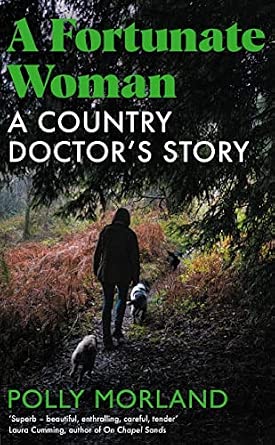
I should have read this book a while ago, but I am so glad that I have done at last. I suppose that as a lifelong fan of John Berger's "A Fortunate Man", I felt that this book could only have been a cheap copy of the original. It certainly was not, and it brings John Berger's seminal work into the 21st Century.
It is unashamedly a plea for the importance of maintaining continuity of care at all costs. It highlights the importance of patient and community centred care but, more so, it must remain the model for rural practice.
Some may say that this type of practice is cosy and unrealistic in modern medicine. My colleagues who are still working tell me of the mountain of demand and the exhausting workload that now epitomises what general practice has become.
Polly Morland takes us through the impact of the Covid 19 pandemic on a small rural practice, its staff and its community. There is no doubt that, following the pandemic, general practice has become the sickest element within our health service. She tells us that "General practice faces a choice between a personal or an impersonal future" and that "the pandemic brought general practice to a critical fork in the road: whether to move forward into a future of impersonal, automated, and fragmented care, or to fight for and protect the quiet, relational, human-centered medicine that lies at the heart of healing."
In this remote community, when the wider world seemed to be closing down and systems were buckling under strain, the local surgery remained an anchor. It was a place where people knew that, despite the chaos, someone was still keeping watch over them.
Polly Morland is an award-winning documentary maker, journalist and author. She came upon Berger's book by chance whilst clearing out her mother's house in the summer of 2020. She was so moved by the book that she sought out the doctor now working in Dr John Sassall's practice (from A Fortunate Man) in the river valley. A Fortunate Woman owes a great deal to its predecessor in regard to its approach and structure. Its exact setting is never explicitly named.
Morland is intrigued by this small rural practice and the doctor who becomes the main character.
She describes the importance of continuity: "A relationship over time fosters familiarity, empathy, understanding, a two-way sense of responsibility, all core ingredients of trust; and this trust then encourages disclosure, improves communication, saves time; which in turn cultivates cooperation and empowerment, reduces anxiety and mistakes, improves the execution of tasks undertaken together... it all sounds like good common sense."
On the danger of transactional medicine she says: "We have, it seems, forgotten to expect, or even to want, a doctor who knows our stories. That experience of a doctor-patient relationship that's more than transactional is slipping from collective memory. And if it's something you have never known, why on earth would you cherish it, or fight for it?"
Morland contrasts the immersive, grounded nature of rural practice with the "conveyor-belt culture" of large acute hospitals, emphasising how rural generalism allows a clinician to stay connected to context, community, and landscape.
Please take the time to read this book, and also read "A Fortunate Man" (if you haven't done so before).
I finish with a quote from John Berger in "A Fortunate Man":
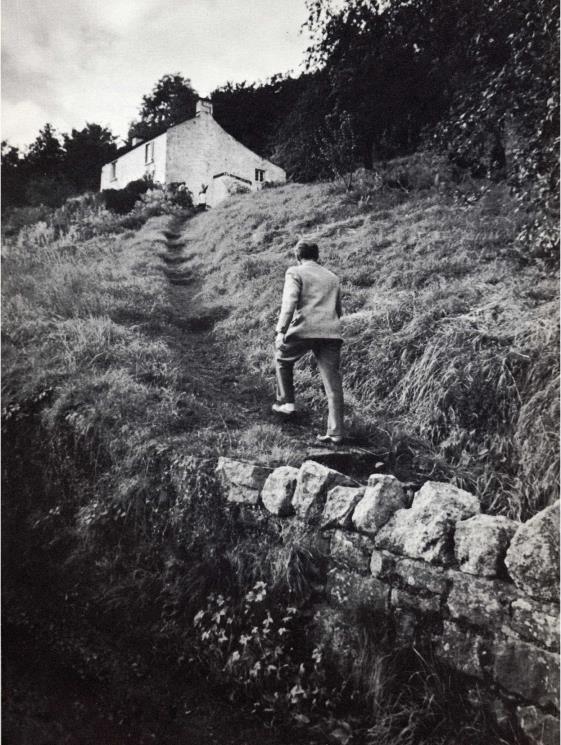
"Sometimes a landscape seems to be less a setting for the life of its inhabitants than a curtain behind which their struggles, achievements and accidents take place. For those who, with the inhabitants, are behind the curtain, landmarks are no longer geographic but also biographical and personal."
Many of you who have worked in small rural communities will understand this.
Photo: Dr Sassall on his rounds from a Fortunate Man
Editor's note
 Rural Miscellany is written each month by Dr John Wynn-Jones, former Chair of the WONCA Working Party on Rural Practice (Rural WONCA). It is a personal collection of stories, reflections, news, and views from rural family medicine around the world.
Read the full September 2026 Occasional Rural Miscellany (PDF)